News


ຂ່າວສານ
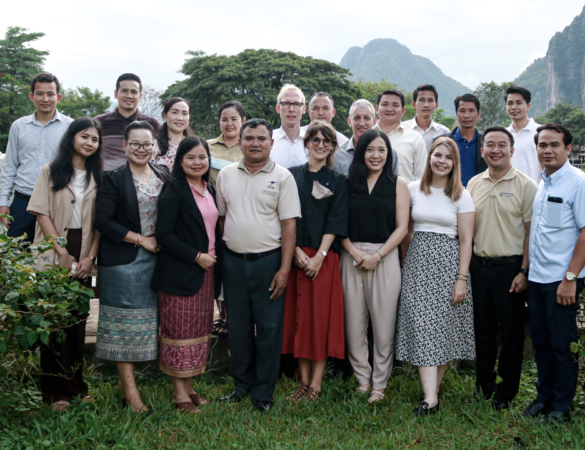
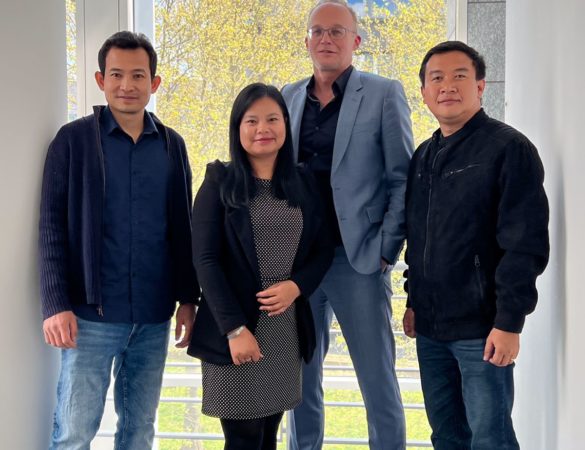
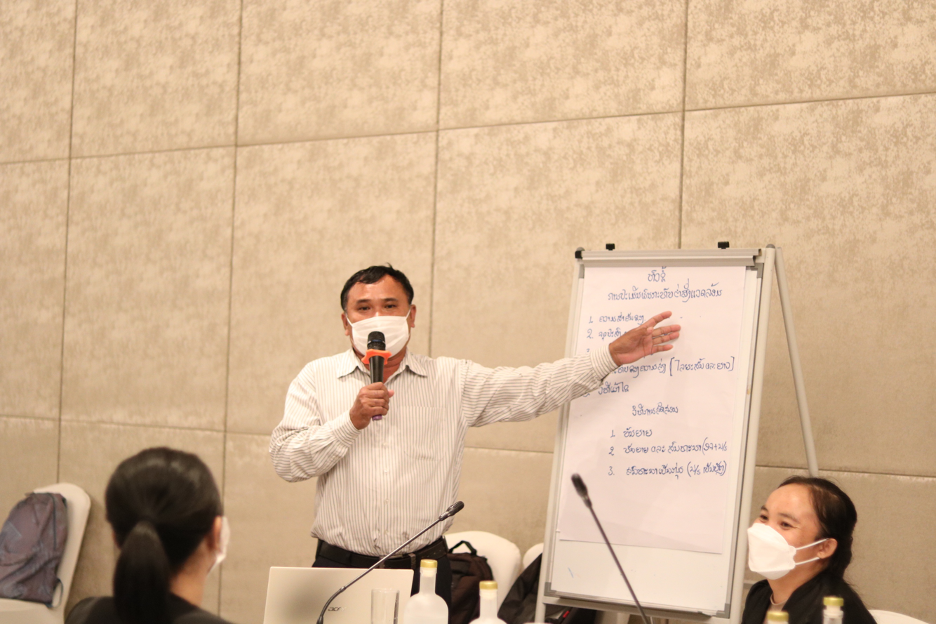
The Inter-University Cooperation Project organised its 3rd Law Summer School from May 18-to 20th 2022 in Vang Vieng. Seventeen candidates were selected based on their interest in improving their legal knowledge and English skills for an intensive 3-day seminar. This edition included 11 law lecturers from the Faculty of Law and Political Science, two law lecturers from the Faculty of Law and Administrative, Champassak University, and four practitioners (two judges and two lawyers). The participation of the two lecturers from the Faculty of Law and Administrative of Champassak University was made possible with the financial support of the LuxDev Project LAO/031.
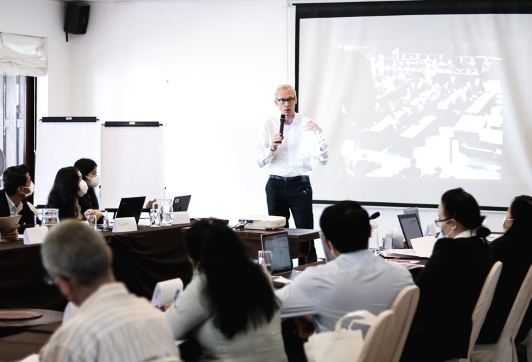
The Law Summer School was dedicated to “Rule of Law Principles”, in particular to the principle of Legality, which is extremely relevant for the application of the law. We focused on Legal Certainty (“Lex Certa“), meaning that the law must be precise and certain, and on the interpretation of the law. We were pleased to welcome Dr. Lasse Schuldt, Assistant Professor at Thammasat University in Bangkok, Thailand, specialised in Criminal law.
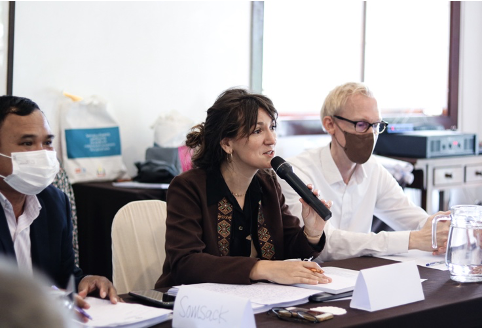
This Law Summer School aims to provide participants with both theoretical and practical knowledge. Each session included practical exercises connecting the theory with hypothetical legal problems.
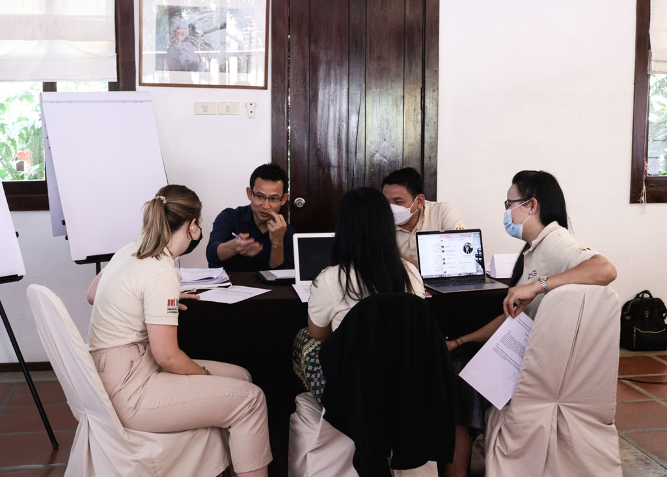
Day 1 of the Summer School was dedicated to defining the scope of this universal principle and its international (ICCPR, art. 15) and domestic sources (art. 4 of the Lao Penal Code). Participants looked in particular at standards for legal clarity and the need to find a balance between flexibility and reliability of legal provisions. During group exercises, participants had to identify and evaluate indeterminate and unclear legal terms in existing selected Lao provisions of the Penal Code. They actively discussed whether vague terms could be understood through specific methods of interpretation or whether they were simply too vague and should be clarified/amended by the legislator.
Day 2 was dedicated to Lex Certa in the application of law. Participants learned about interpretation techniques. In the afternoon, the participants were divided into four groups to solve hypothetical legal problems provided by the instructors. The restitution was done in the form of role play involving pleading and as the prosecutor or the defendant.
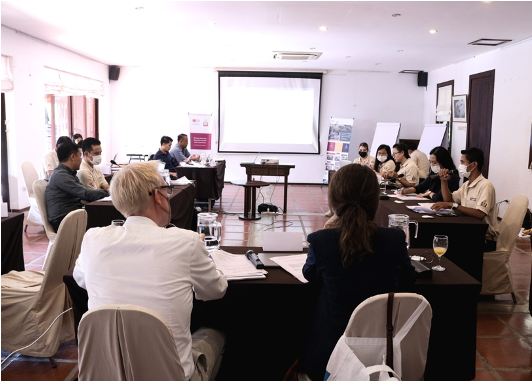
Day 3 was dedicated to Lex Certa in law-making. Participants looked at what makes good legislation in relation to legal certainty. In the afternoon, participants were asked to draft a “Fake News” offence.
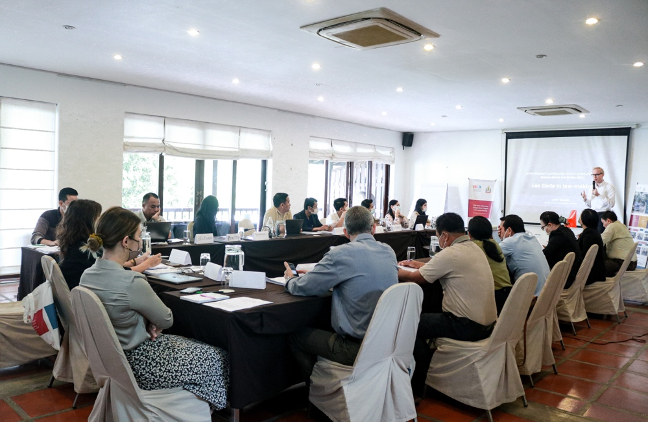
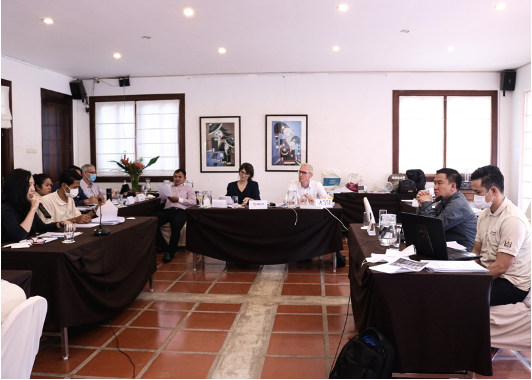
All participants showed enthusiasm and motivation during the event and they energetically interacted with the guest speaker and with each other. They learned to understand the importance of respecting the principle of legality in all branches of law. All participants were provided a reading list to go further with learning support material such as explanatory textbook chapters, reference to Thai case-law, abstracts of different Southeast Asian Penal Codes to strengthen their knowledge.

ຂ່າວສານ
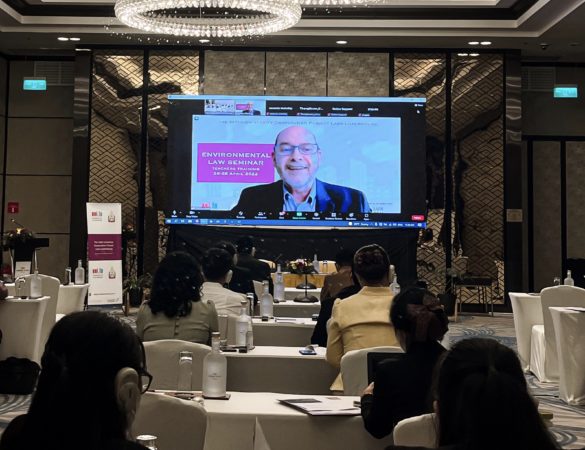
In the framework of the Inter-University Cooperation Project, the University of Luxembourg is supporting the teaching Environmental Law in Lao PDR, an academic course essential for sustainable development and climate protection. A 3-day seminar on Environmental Law was organised on April 26-28 2022 in Vientiane in a hybrid format. For the first time this year, after a long period of restrictions due to Covid-19, participants could attend the event face-to-face, whereas the main speaker delivered the seminar via Zoom. The seminar focused on substantive law and teaching skills in Environmental Law to strengthen the skills of environment law lecturers from the Faculty of Law and Political Science, National University of Laos, the Faculty of Law and Administrative, Champassak University, and also National Institute of Justice.
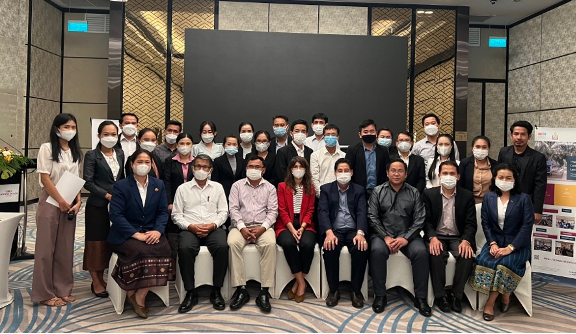
This Environmental Law seminar was organised in collaboration with Mr. Matthew Baird, Director of the Asian Research Institute on Environmental Law (ARIEL) and coordinated by Dr. Perrine Simon (Uni.lu’s Liaison Officer). Matthew Baird is a lawyer specialised in the area of Environmental Law and an extensive experience in lecturers’ training in South East Asia having assisted ADB in developing a “Train the Trainers programme” for capacity development for Environmental Law academics in Asia, running in Cambodia, Thailand, Myanmar, and the Philippines.
Morning sessions were dedicated mostly to lectures, whereas afternoon sessions included group activities and discussions. Participants were provided with a syllabus including references for learning and teaching Environmental Law such as online courses, handouts, templates of syllabus, and were also granted access to a folder including essential electronic resources.
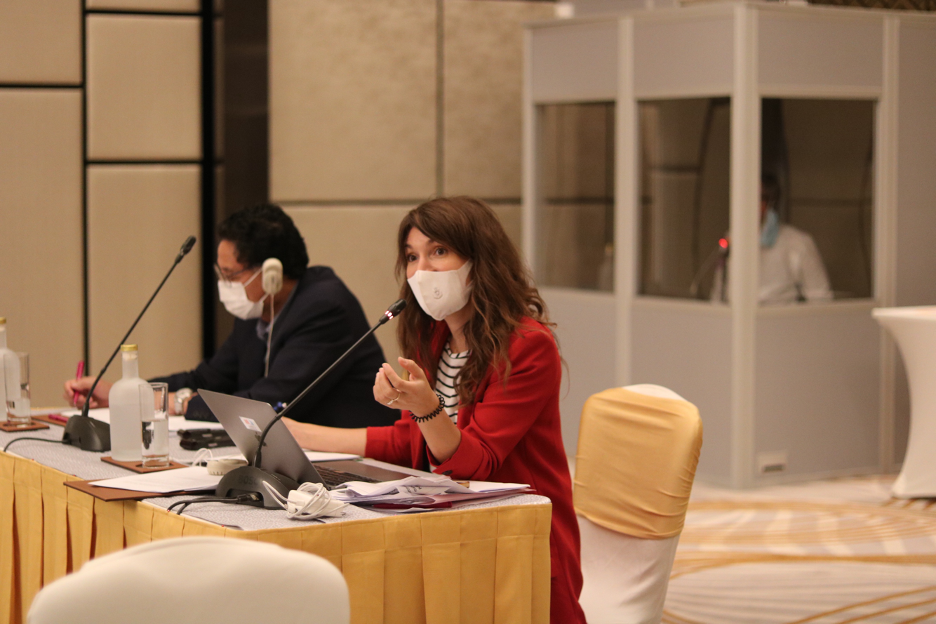
The first day of our seminar was dedicated to Introduction to Environmental Law and International Environmental Law and dealt with core environmental principles and international instruments, covering both hard and soft law.
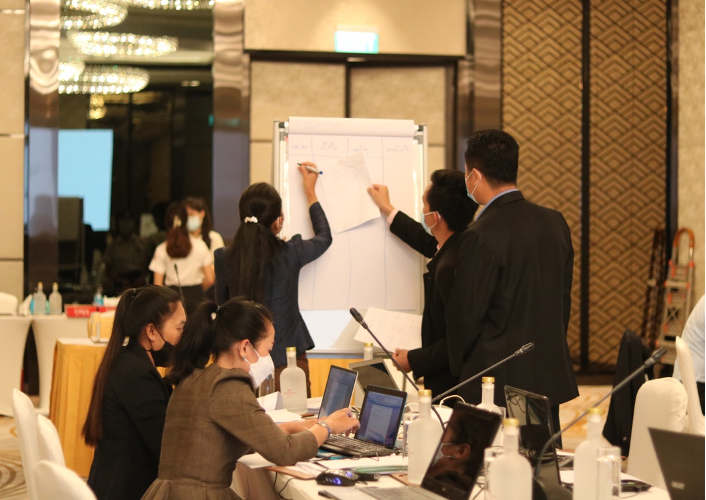
In the afternoon, we welcomed via Zoom Dr David J. Devlaeminck, lecturer at the School of Law, Chongquing for an Introduction to Water Law, focusing specifically on the Watercourses Convention and the Mekong River basin. Then, Prof. Amanda Kennedy (Faculty of Law, Queensland University of Technology, and Co-chair of the IUNC AEL Teaching Committee), gave a presentation on “Teaching Environmental Law with Pedagogy and Practice”. The participants were introduced to different learning theories and to the Bloom’s Taxonomy, dealing with learning outcomes, assessment methods, and learning activities.
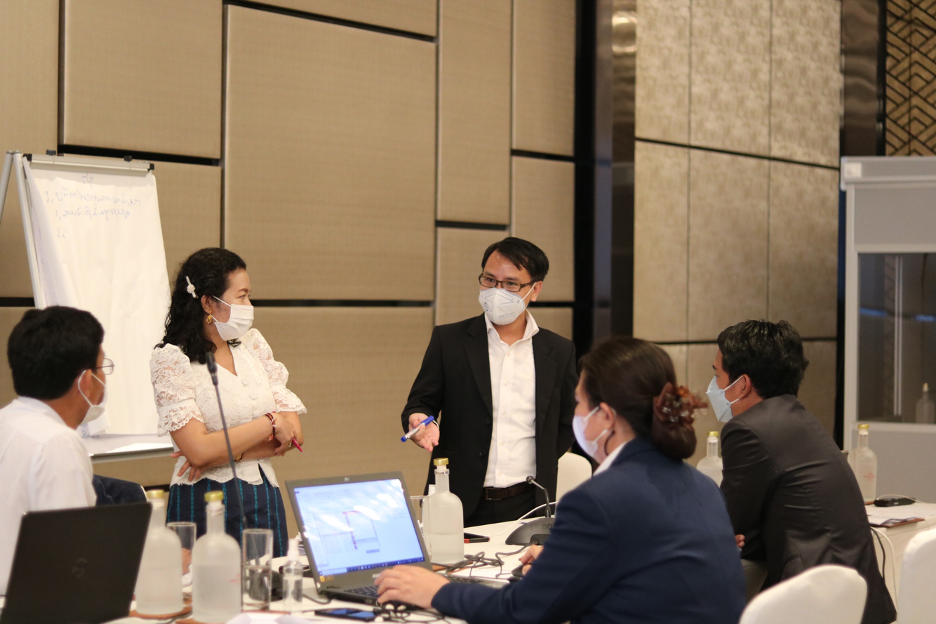
The second day of the seminar was devoted to teaching Environmental Impact Assessment (EIA) and Comparative Environmental Law; teaching Climate Change Law and Litigation; and International Environmental Law with Matthew Baird. Dr. Perrine Simon led group discussions on curriculum design in the afternoon, where participants had to work in groups and choose one topic related to Environmental Law, such as Climate Change, International Legal Regime, International Environmental Law, and Natural Resources Law, and design their own curriculum on environmental law, including the content, learning objectives, and lesson plan. The other discussion topic was on pedagogy, where participants had to look back at their lesson plan and propose the learning activities or exercises to run with the students.
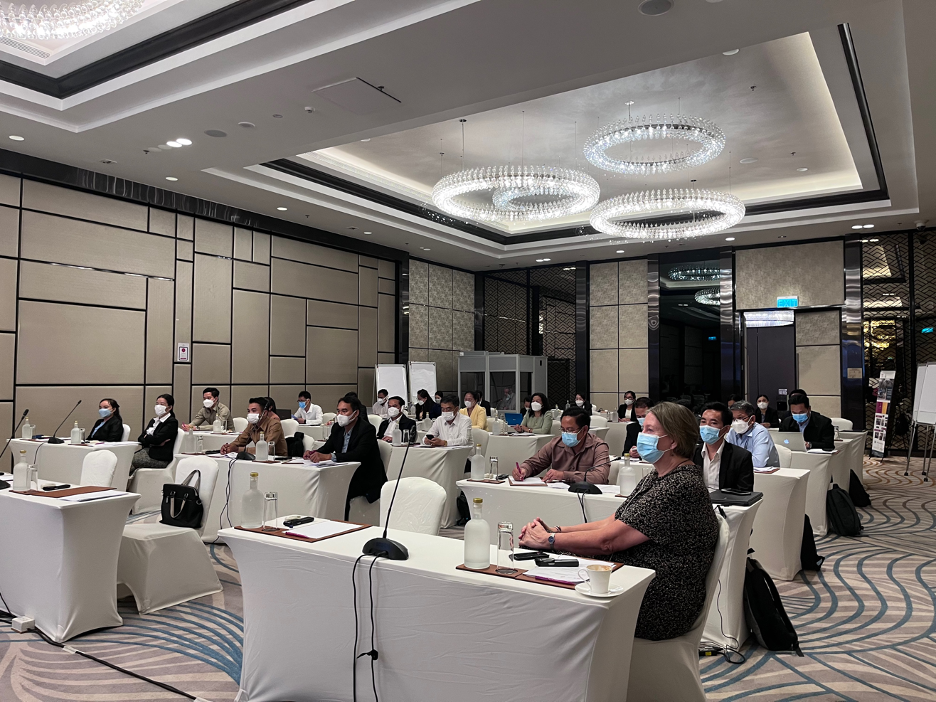
On the last day of the seminar, we had the chance to welcome Associate Prof. Jonathan Liljeblad from the Australian National University via Zoom to discuss designing Environmental Law curriculum. Participants also experienced blended learning and asynchronous teaching by watching a recorded lecture on “Human Rights and the Environment” prepared by Ass. Pr. Liljeblad. The final session with Mr. Baird dealt with resolving environmental disputes (environmental courts), environmental crime, and environmental justice. In the afternoon, we had a group discussion on reflective practice with Dr. Perrine Simon. Lecturers highlighted as their main challenges the lack of resources and of teaching tools, together with difficulties in communicating and transferring knowledge to students. They praised the access to teaching material and learning about pedagogy acquired during this 3-day event.
The participation of the lecturers of the Faculty of Law and Administrative of Champassak University and of the National Institute of Justice was made possible with the financial support of the LuxDev Project LAO/031.
ຂ່າວສານ
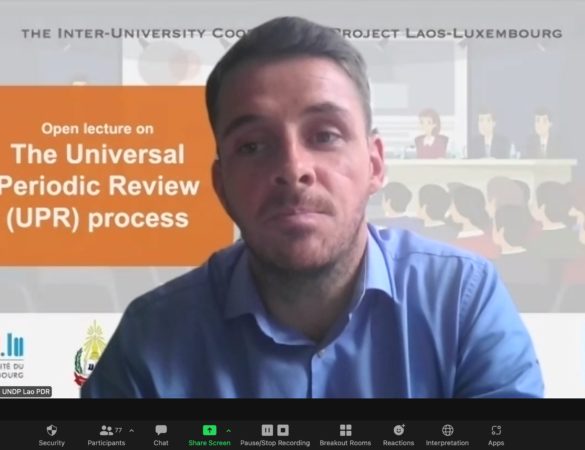
In the framework of the Inter-University Cooperation Project Lao-Luxembourg, the University of Luxembourg organised a special online lecture on the Universal Periodic Review Process (UPR) on the 11th of May 2022. We had the pleasure of welcoming Mr. Seán O’Connell, the Head of Governance of the United Nation Development Programme in Lao PDR (UNDP Lao PDR). Previously Seán was the Human Rights and Rule of Law Officer with UNDP Viet Nam, working on international human rights reporting mechanisms and business and human rights.
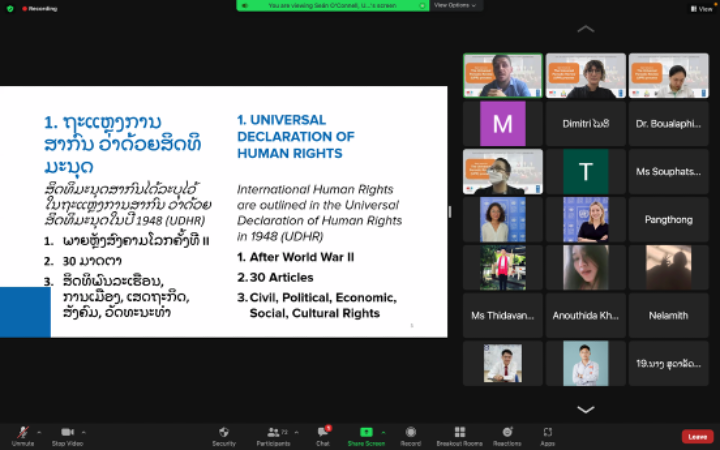
The speaker introduced the participants to the Universal Periodic Review (UPR) process. The Universal Periodic Review (UPR) is undertaken by the UN Human Rights Council and involves a periodic review of the human rights records of all 193 UN Member States. It allows States to assess each other and report what actions they have done to improve the human rights situation in their country (see for more details: https://www.ohchr.org/en/hr-bodies/upr/basic-facts).
Mr. O’Connell explained the three steps of the review process. There is first a “pre-review”, based on information provided by the State under review (national report), on UN reports and on information from other UN members institutions and civil society. The second step is the review which consists in an interactive discussion between the State under review and other UN Member States, where recommendations can either be accepted or noted. The third step is the post-review where monitoring of the implementation of the recommendation takes place.
The presentation also gave some examples of good recommendations from States taking part in the UPR.
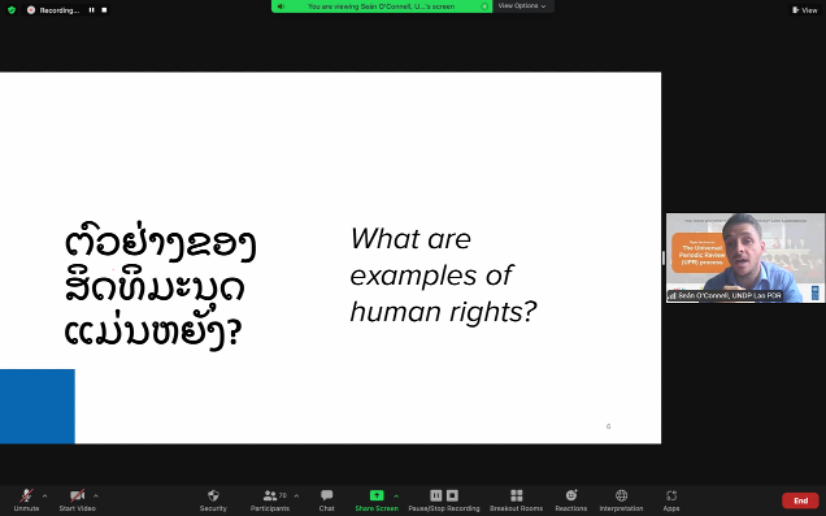
At the end of the session, Mr. O’Connell ran a Kahoot quiz to test the students’ knowledge. Students actively engaged in the quiz as well as in the Q & A session.
The lecture was attended via Zoom by 73 participants, including students of the FLP, as well as Human rights lecturers and academic staff from the Faculty of Law and Political Science.
On the UPR in Lao language, see: http://www.mofa.gov.la/images/legal-documents/upr.pdf
ຂ່າວສານ
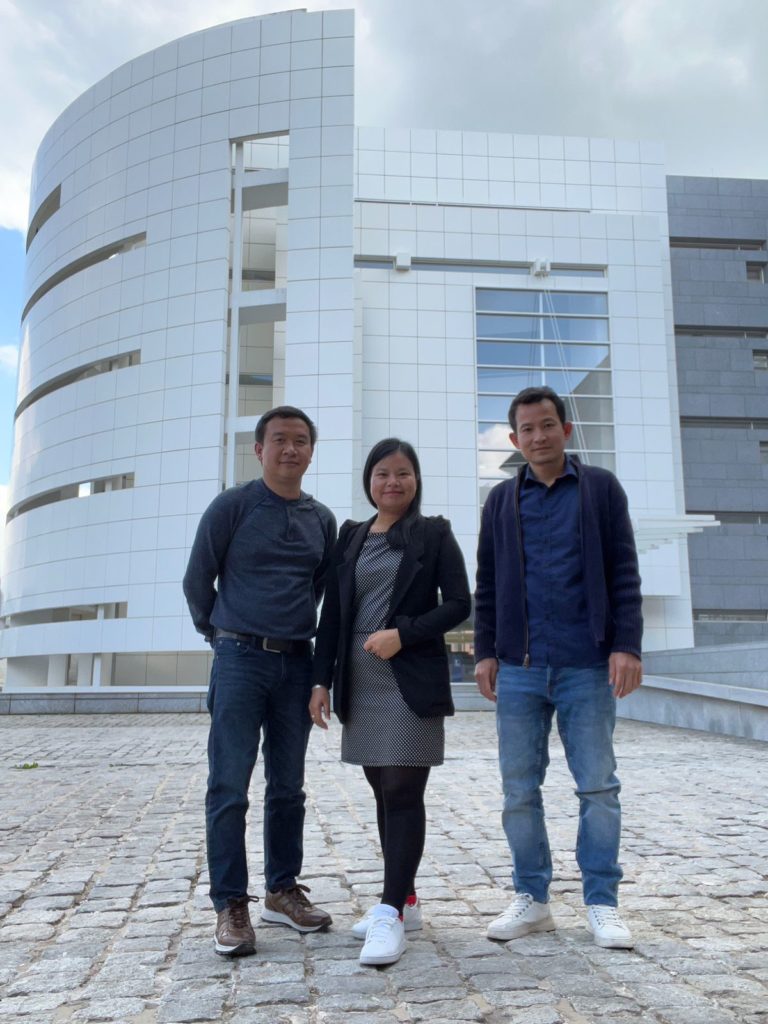
The University of Luxembourg welcomed three Lao lecturers from the Faculty of Law and Political Science of the National University of Laos for a two-month research stay in March and April 2022. Mr. Latdavanh Donkeodavong, Mr. Phanthasack Mingnakone and Ms. Boualaphiane Sisouk could finally travel to Luxembourg after the easing of travel restrictions to make the most of the research facilities of our University.
The three lecturers were selected at the end of 2019 by the University of Luxembourg following a public call for applications requiring a research proposal, a cover letter and a CV and an interview. The selection was based on the quality of their research proposal, their level of English and the coherence of the motivation for applying.
The Inter-University Cooperation Project is supporting three essential topics for the development of Lao PDR and the strengthening of the Rule of law: Mr Donkeodavong is working on State Compensation Law, looking at comparative perspectives from Germany and France; Mr Mingnakone is investigating the legal framework on pre-trial detention and the right to a fair trial in Lao Criminal Law Procedure; Ms. Boualaphiane Sisouk is examining the legal framework on the implementation of international treaties in Lao PDR.
During their research stay, the lecturers had the chance to present their intended research to Law Professors and PhD students during an event organised by Doctoral School of Law at Kirchberg Campus. They also received guidance from Professor Stefan Braum (Project leader) and met regularly with PhD candidates. They were allowed full access to academic resources and enjoyed in particular the facilities of the Learning Centre at Belval campus.
Back in Laos, they are now continuing their research under the supervision of Dr Perrine Simon, (Liaison Officer) and are expected to complete it before the end of 2022 for a publication in a law journal in English.
ຂ່າວສານ
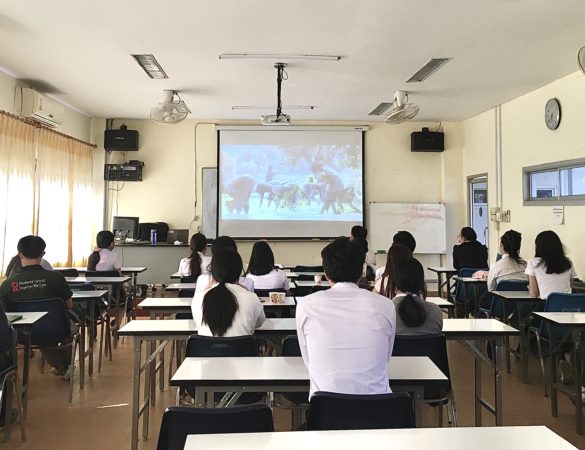
In the framework of the Inter-University Cooperation Project Laos-Luxembourg, the University of Luxembourg organised its first law movie club on the 30th of March 2022. The objective is to broaden students’ legal knowledge and cinema culture in a fun and enjoyable way. The students will have the chance to learn more about international justice and other legal systems. Most of the movies we plan to screen will be in English, so that the students can improve their English skills and develop their legal vocab.
The movie screening was organised in partnership with the Ms Khonesavanh Vongvanhnaxay, Human rights law lecturer and attended by 21 students and from the Faculty of Law and Political Science, International Relations Department.
For our first session, we screened the movie “First They Killed My Father” directed by Angelina Jolie released in 2017 on Netflix, which received several awards. The movie is based on the true story of Luong Ung and on her book published in 2000. The film portrays her heart-breaking family story in the labour camps in Cambodia and her enrolment as child soldier under the Khmer Rouge regime in the 1970s.
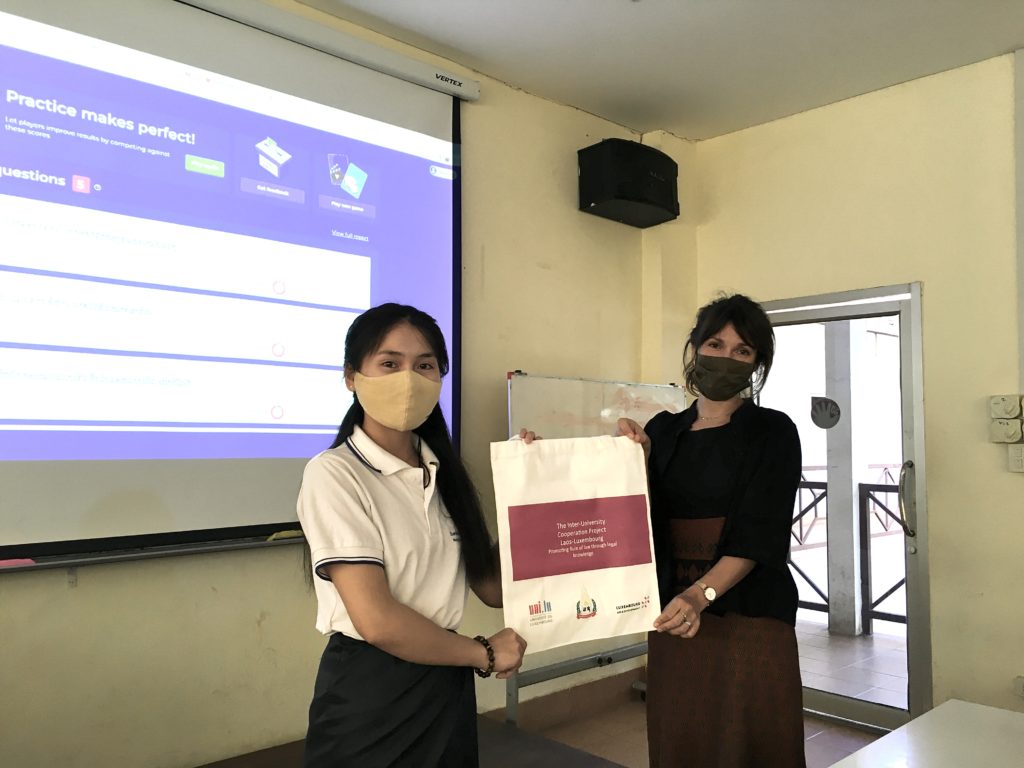
At the end of the session, the Project intern Ms Maynika Phongsa ran a Kahoot quiz prepared with Dr Perrine Simon testing the students’ knowledge on International criminal law, relating the movie to the ICL offences of “genocide”, “crime against humanity” and “war crime” and the Extraordinary Chambers in the Courts of Cambodia. The winner of the quiz Ms Soutlasi Yarkaomany was rewarded with one of our personalised Project bags!
ຂ່າວສານ
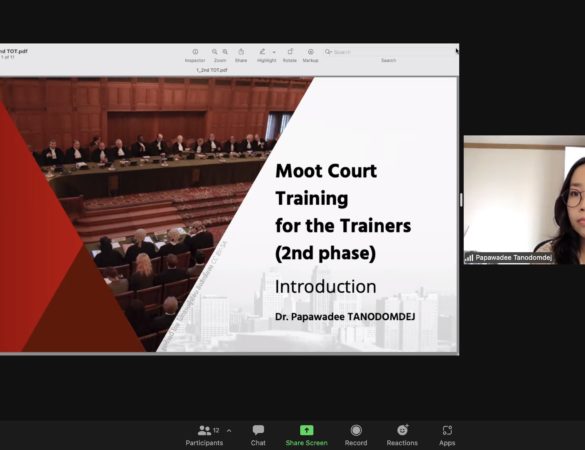
The University of Luxembourg is actively supporting problem-based learning (PBL) through training for lao lecturers to lead them on the path to be a “Moot coach”. Following the success of our first ‘train-the trainer’ moot court in November 2021, lao lecturers were eager to deepen their mooting skills and solicited a follow-up training with Dr. Papawadee Tanodomdej from Chulalongkorn University (CU). Dr. Tanodomdej is a lecturer of Public international law, the coach for Chulalongkorn’s team in the Philips C. Jessup International Moot Court Competition 2021 and is also actively involved in the Thailand IHL Moot Court Competition organised by the ICRC.
The training, which took online place from the 1st to the 24th of March, 2022, was attended by around 15 lecturers from the FLP of NUOL and from the Faculty of Law and Administration, of the University of Champasak
The main objectives of this follow-up training were to build understanding on IHL and ICL (International Criminal Law) legal issues and pleading skills to prepare the lecturers in moot court coaching. The training was run in Thai language and divided into 4 sessions. The first session covered specific selected legal issues (one count of a previous moot problem) and the sources of law/ research material. The second session covered the jurisdiction of the ICC and how jurisdiction apply to actual cases before the ICC. The third session dealt with the “war crime of compelling a prisoner of war or other protected person to serve in the forces of a hostile Power” and the constitutive elements of this offence, as well as with individual criminal responsibility. The lecturers were divided into two teams to work together and prepare their pleading as the defendant and prosecutor for the last session during which they practiced real pleading
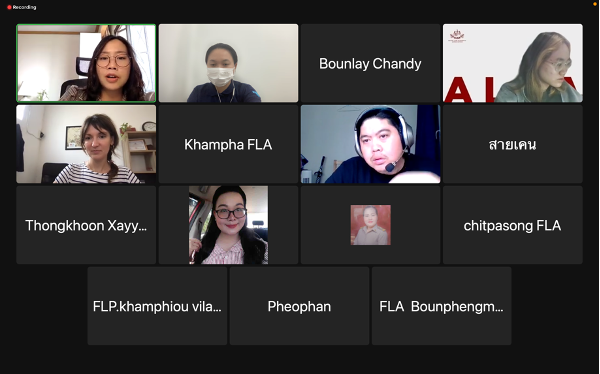
During the training, participants also had the opportunity to work in teams in break-out rooms and had research “homework” to do to prepare the pleading. This practical aspect of the training helped the participants to gain in-depth understanding on how moot court pleadings work. Dr. Papawadee also shared her experience as a coach in Thailand and on how to make good pleading.
The training was particularly fruitful and constitutes a step forward the strengthening of moot court collaboration with Thai Universities. The Inter-University Project plans to scale up cooperation with Thailand by organizing a joint Moot court in Thai language focusing on a simpler moot case of International Criminal Law, bringing the new Lao coaches on board with a few Lao teams of students. This could be hosted either by Thammasat or Chulalongkorn University in Bangkok during spring 2023.
ຂ່າວສານ
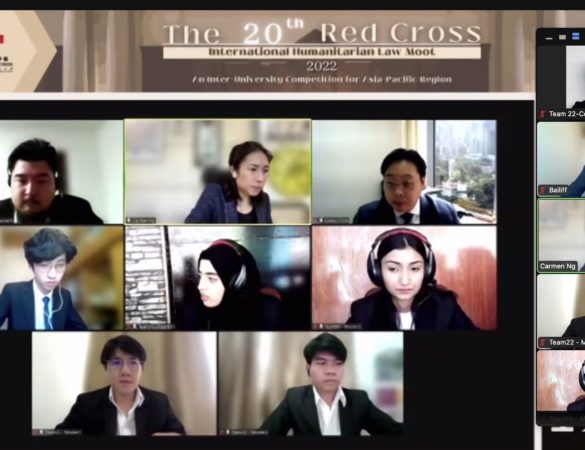
Congratulations to the Lao team participating in the Red Cross International Humanitarian Law Moot Court, which was again this year exceptionally organized through a virtual format due to covid-19, from 9-13th March,2022. The University of Luxembourg has been actively supporting NUoL’s participation in this international competition! Dr. Perrine Simon, the Liaison Officer of Uni.lu, has been coaching the team during from the January to March and hosted the team during the competition at the Project’s office at the Faculty of Law and Political Science.
The Lao team has been trained intensively after winning the National Round in December 2021 until the last day of the competition. They worked extremely hard and put a lot of effort into this highly competitive moot court on International Criminal Law, entirely in English, to challenge universities from the Asia-Pacific region.

After five days of competition, with a total of 24 teams of law students across the Asia-Pacific, Singapore Management University (Yong Pung How School of Law) won the competition. The first runner-up was awarded to University Gadjah Mada (Faculty of Law), Dylan Jesse Andrian from Universitas Gadjah Mada won the Best Mooter. The best prosecution memorial was awarded to the University of Hong Kong and the best defense memorial went to the Chinese university in Hong Kong and Chulalongkorn University. The Quarter-Finalist teams were: Interantional Isalamic University Malaysia, Singapore Management University, the University of Hongkong, the University of Tokyo, the University of New South Wales, the University Gadjah Mada, the University of San Agustin and Victoria University of Wellington. For more details on the 20th IHL Moot Court competition results and announcement, you can find the link here: https://www.redcross.org.hk/en/moot20/results.html.
Laos did not make it to the top eight teams but the team got very positive feedback from the judges during the oral pleading of the general rounds! They also managed a good scoring in the written memorials with an average of good-good+.
This Moot court organised by the ICRC is a great way to stimulate legal thinking, by learning how to develop legal arguments appropriately. Students also have improved their critical thinking and problem solving skills, analyzing skill, presentation skills, debating skills and also their English!
ຂ່າວສານ
Under the framework of the Inter-University Cooperation project between the Grand Duchy of Luxembourg and Lao People’s Democratic Republic, the University of Luxembourg and the National University of Laos are proud to open a call for applications for the third student exchange at the University of Luxembourg thanks to the Erasmus+ Progamme funded by the European Union.
We are happy to offer a grant covering all expenses (travel, cost of living including) to study for one semester at the Faculty of Law, Economics and Finance (FDEF) of the University of Luxembourg, which will provide a friendly and dynamic international academic environment at the heart of the Europe.
We are looking for enthusiastic students preparing a law degree or willing to enter a law career/law degree in the future. Candidates will be selected on the basis of the excellency of their grades, interest for studying law, the quality of their application and their level of English (B2 recommended).
The selected student will be able to follow law courses in English such as Introduction to Law, Global Constitutional Law, Public International Law, Global Constitutional Law, Philosophy of Law, Public Administration with a comparative Law Perspective and Introduction to International Private Law.
Applications must be written in English and should encompass:
– A CV with full contact details;
– A motivation letter.
Deadline: 30th of March 2022
Selected candidates will be contated for an interview online on 1st of April 2022.
Applications must be sent to Ms Sonenaly Nanthavong s.nanthavong@nuol.edu.la and Dr Perrine Simon perrine.simon@ext.uni.lu
ຂ່າວສານ
In the framework of the Inter-University Cooperation Project Lao-Luxembourg, the University of Luxembourg organised a special online lecture on the “International Bill of Human Rights” on 23rd February 2022. We had the pleasure to welcome again Dr. Başak Bağlayan, post-doctoral researcher at the University of Luxembourg. Ms. Bağlayan’s conference focused on the “International Bill of Human Rights”; she presented the instruments constituting this bill of rights: the Universal Declaration of Human Rights (UDHR), the International Covenant on Civil and Political Rights (ICCPR), the International Covenant on Economic, Social and Cultural Rights (ICESCR), and the optional protocols to ICCPR. Ms. Bağlayan elaborated on the content of these instruments and their legal status. The presentation later particularly focuses on the implementation and monitoring mechanisms of the ICCPR and ICESCR, including their scope of application. Dr.Başak Bağlayan concluded her lecture by explaining the rules of treaty reservation.
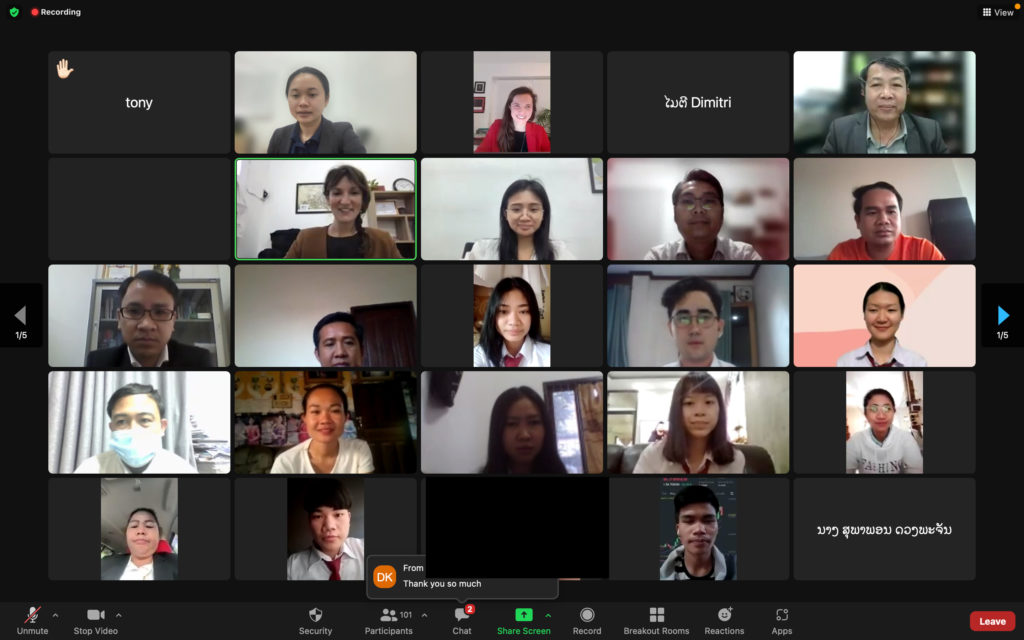
The lecture was attended via Zoom by 117 participants including students of the FLP, as well as lecturers, and Academic staffs from the Faculty of Law and Political Science, the National Institute of Justice, the Faculty of Law and Administration of Champasack University. Participants actively engaged with the guest speaker in the Q&A session.
ຂ່າວສານ
The University of Luxembourg is proud to announce the opening of applications to select academic staff to undertake research in the field of law from the Faculty of Law and Political Science of the National University of Laos to pursue a research project under the supervision of the Inter-University Cooperation Project Laos-Luxembourg.
Criteria
The research programme is dedicated to Lao lecturers to improve their academic and research skills in the legal field, in order in the long-run to strengthen the capacities of the Faculty of Law and Political Science of the National University of Laos. Applicants must be lecturers at the Faculty of Law and Political Science of NUOL, with at least a Bachelor degree in law or with a strong component in law. There are no criteria in terms of age. Candidates will be selected based on merit. The University of Luxembourg will have full discretion in the selection and or rejection of the applications.
In line with the “Luxembourg General Cooperation Strategy for Sustainable Development – Road to 2030”, the Inter-University Project welcomes research proposals falling under the following themes:
- Rule of law and governance;
- Fundamental rights;
- Gender equality;
- Environment sustainability and climate protection.
Supervision
The Project will provide thorough research guidance during the grant period. The selected candidates will be supported to carry out their research and be supervised by the Project’s Liaison Officer through regular meetings to share the progress of their research.
Selected candidates will be required to participate fully in capacity building activities organised by the Inter-University Cooperation (seminars, research workshops, etc) and will be asked to present their research to the public. They will also have to submit advancement reports every 3 months, in accordance with the research contract signed with the University of Luxembourg.
Administration
Selected candidates will receive a grant equivalent to 1 200 EUR to complete their research.
The scholarship will be granted by Uni.lu to the lecturer in 4 instalments. Payment of the Uni.lu’ scholarship is based on merit and will be conditional on compliance with the obligations of the researcher set up in the “scholarship agreement” including in particular the submission of advancement reports every 3 months to the Liaison Officer of Uni.lu in Vientiane.
The candidates will be entirely responsible for the management of the funding allocated; no extra-costs will be borne by the Project.
The candidates will conduct their research from Lao PDR.
Selected candidates shall ensure that their research complies with the University of Luxembourg procedures, in particular on research ethics and plagiarism.
The research will take the form of a paper written in Lao or in English. The length of the final paper will be discussed with the Liaison Officer. The research must be completed within one year from the date of signing the grant contract, and the agreed research outcome submitted.
Applicants can only apply for a funding grant as an individual researcher, not as a team or institution.
Application
The application must be written in Lao or in English and should encompass:
– A cover letter (not to exceed 2 pages);
– A curriculum vitae with full contact details including academic experience (courses taught, previous research experience, university curriculum, etc);
– A research proposal (not to exceed 3 pages), including the bibliography. The project proposal should include a description of the research topic (introduction), the hypothesis, research objectives and envisaged methodology as well as a short bibliography (15 references maximum).
Application deadline: 28 February 2022
The pre-selected candidates will be invited for an interview.
Applications should be submitted to Dr. Perrine Simon: perrine.simon@ext.uni.lu
and to Ms. Thongkhoon Xayyahong: thongkhoonxayyahong@gmail.com
ຂ່າວສານ
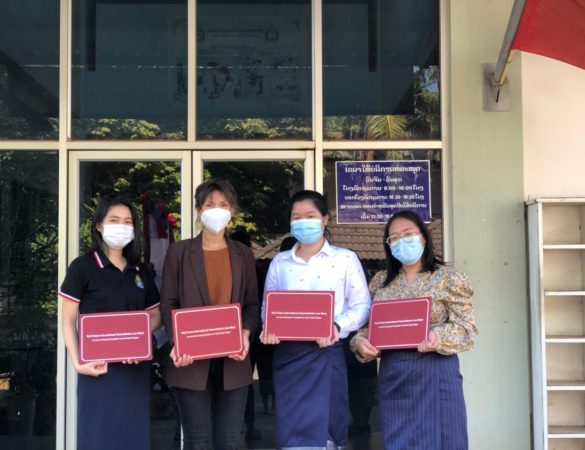
On the 16th of December 2021, Ms. Daopakay SOUVANNALATH and Ms. Noutthida MISOUPHAN the winner of the national round and the mooter, and Ms. Soudaphone VIRAVONGSA the researcher were rewarded for their participation in the Red Cross International Humanitarian Law Moot Court competition international round, as a represents of the lao team. The competition was exceptionally organized through a virtual format on 11-12 March 2021 by submission of memorials and virtual oral hearings, in which over a hundred of law students from different Asia-Pacific cities gathered on-line. A total of 26 teams of law students, competed in a series of simulated trials of controversial issues related to armed conflicts and humanitarian challenges. The event is now the largest inter-university competition in scale of its kind in the Asia-Pacific Region.
The certificates were handed-over by Dr. Perrine Simon, the Project’s Liaison Officer of the University of Luxembourg who is managing the Inter-University Cooperation Project and has been intensely coaching the three students. Congratulations once again for the hard work.
With a total of 26 teams of law students from the Asia-Pacific, Laos did not make it to the Top Eight Teams. The Quarter-Finalist Teams were: China University of Political Science and Law; Royal University of Law and Economics; Singapore Management University; The University of Hong Kong; The University of Sydney; University of the Philippines; University of Tokyo; Victoria University of Wellington – Te Herenga Waka). This year no public ranking was issued for the other teams. However, the Lao team got some very good feedback from the judges’ panel. Both their written memorials and oral pleadings provided for a good style and analysis, as well as good citations and sources, with detailed references. They achieved a general scoring with the rate “good”!
This Moot court organised by the ICRC is a great way to stimulate legal thinking, by learning how to develop legal arguments appropriately. Students also have improved their presentation skills, debating skills and English!
ຂ່າວສານ
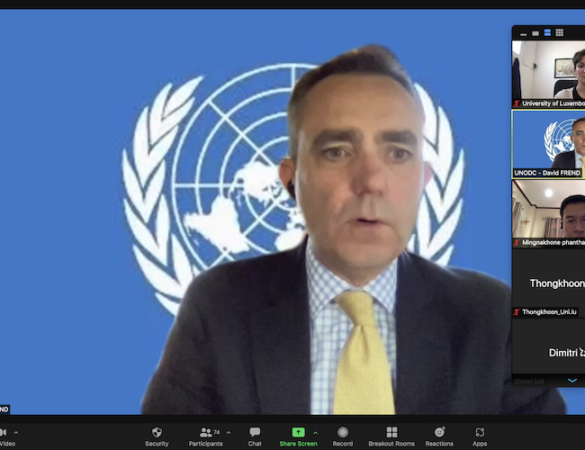
In the framework of the Inter-University Cooperation Project Laos-Luxembourg, the University of Luxembourg organised a special online lecture on “Criminal Law and Procedure – an overview” in collaboration with the United Nations Office on Drugs and Crime (UNODC) in Laos. The Project had the chance to welcome Mr. David Frend, who is the Anti-Money Laundering and Counter-Terrorism Financing Adviser for the Mekong Region at UNDOC. Mr. Frend not only shared his theoretical but also practical knowledge with the audience as a former barrister in England with a wide range of experience as a court-based advocate at both international and domestic level.
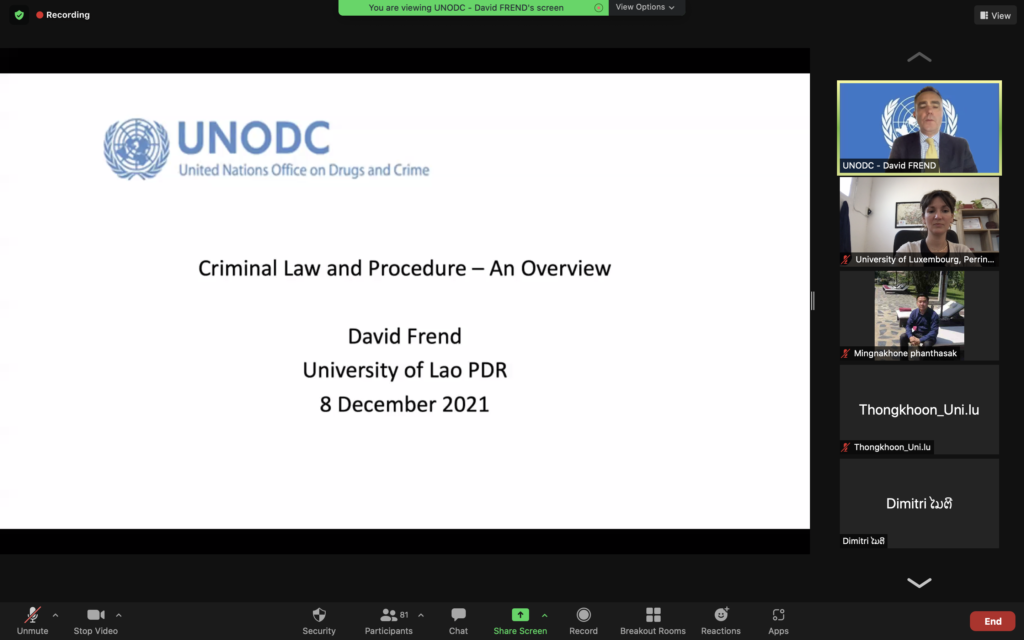
The lecture was attended by 80 students and lecturers from the Faculty of Law and Political Science as well as from the National Institute of Justice located in Luang Prabang, Savannakhet and Vientiane on last Wednesday 8th of December via Zoom.
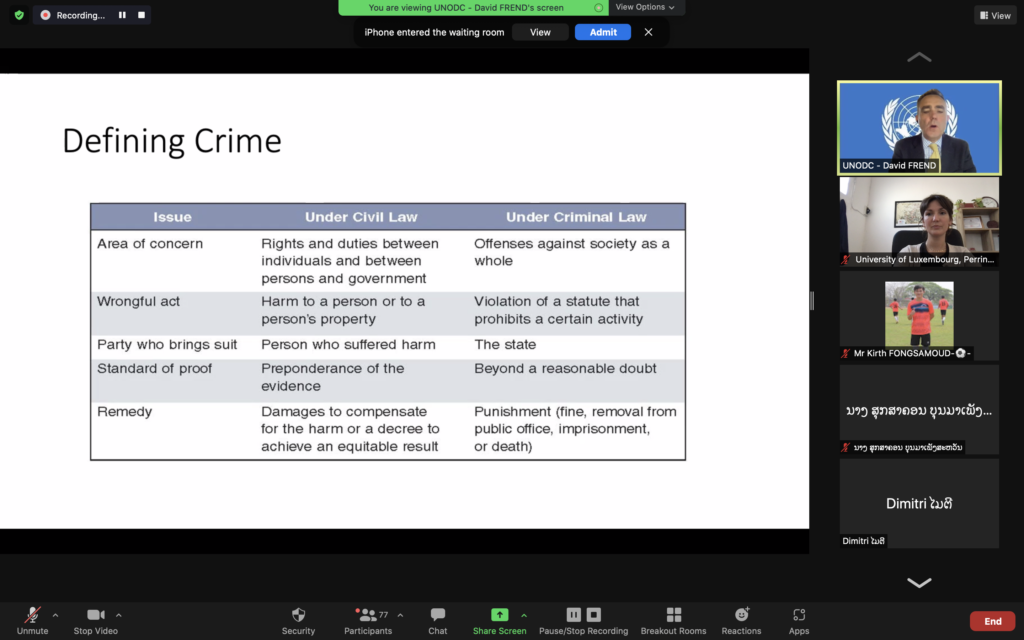
The speaker gave on overview of criminal law and procedure highlighting key differences between civil law and common law and dealing with actors of the criminal proceedings, definition of crime and burden of proof, constitutive elements of crime (actus reus and mens rea), types of crime as well as key aspects of the prosecution and trial phase. The participants energetically engaged with the speaker in a Q&A session for more than one hour!
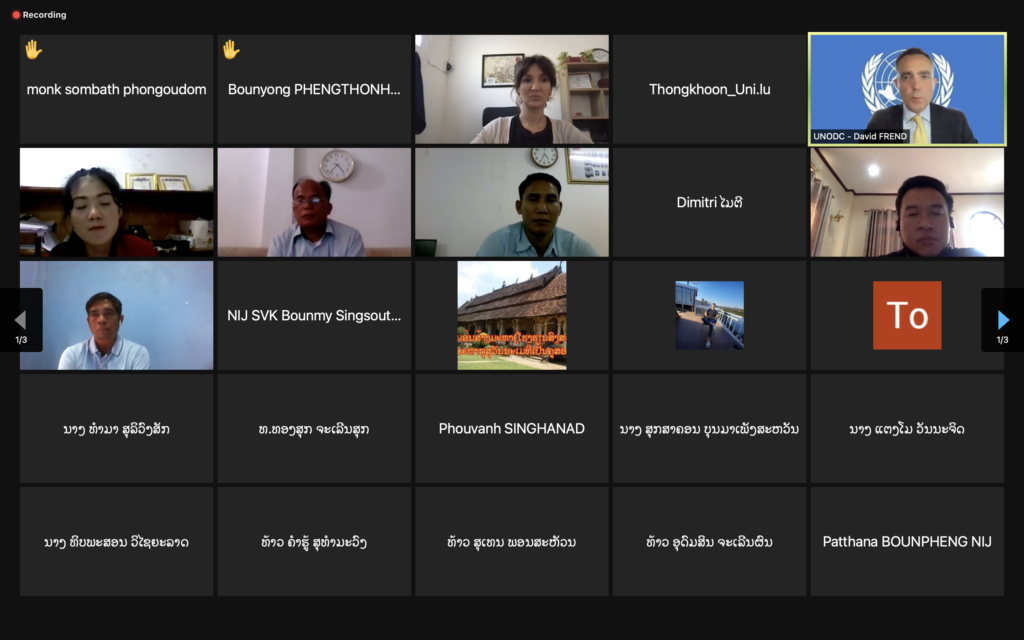
Given this fruitful exchange and positive feedback, the Inter-University Project aims to organise further lectures in partnership with UNODC in 2022!
ຂ່າວສານ
On the 10th of December 2020, the Lao National round of the ICRC International Humanitarian Law Moot Court competition took place at the Faculty of Law and Political Science (FLP) with the assistance of the University of Luxembourg.
This year, the competition went on in a hybrid format. The judges were assessing the mooters through Zoom while the mooting teams were gathered and pleaded face-to-face at the FLP.
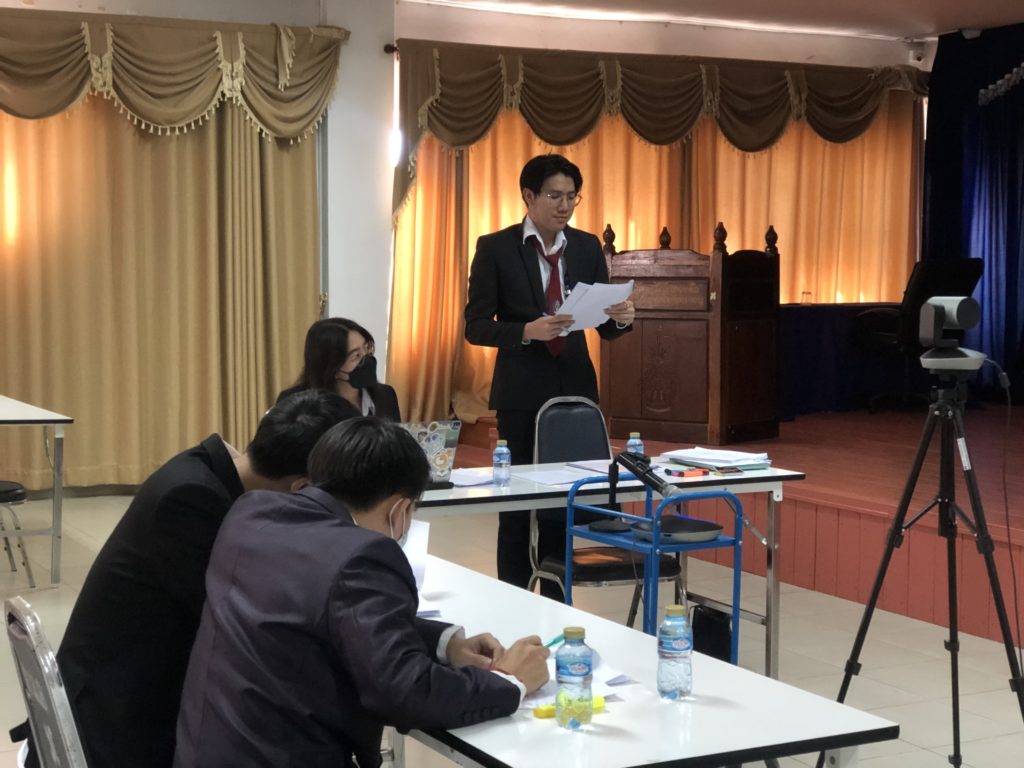
The fictitious case that the teams were pleading was set before the International Criminal Court. Four teams of two mooters competed against each other representing in turn the Defence and the Prosecution. Judges for this year’s national round of the competition included Mr. Sippakorn Chongchuwanich (ICRC Legal Advisor), Ms. Sophia Cason from The Asia Foundation (Chief of Party, Laos Legal Aid Support Program) and Violette Juncker (Junior Technical Advisor for LuxDev LAO/031).
Prior to the competition, the teams had received a week-long online training in November supported by the University of Luxembourg with Dr. Perrine Simon and Dr. Lawrence Siry.

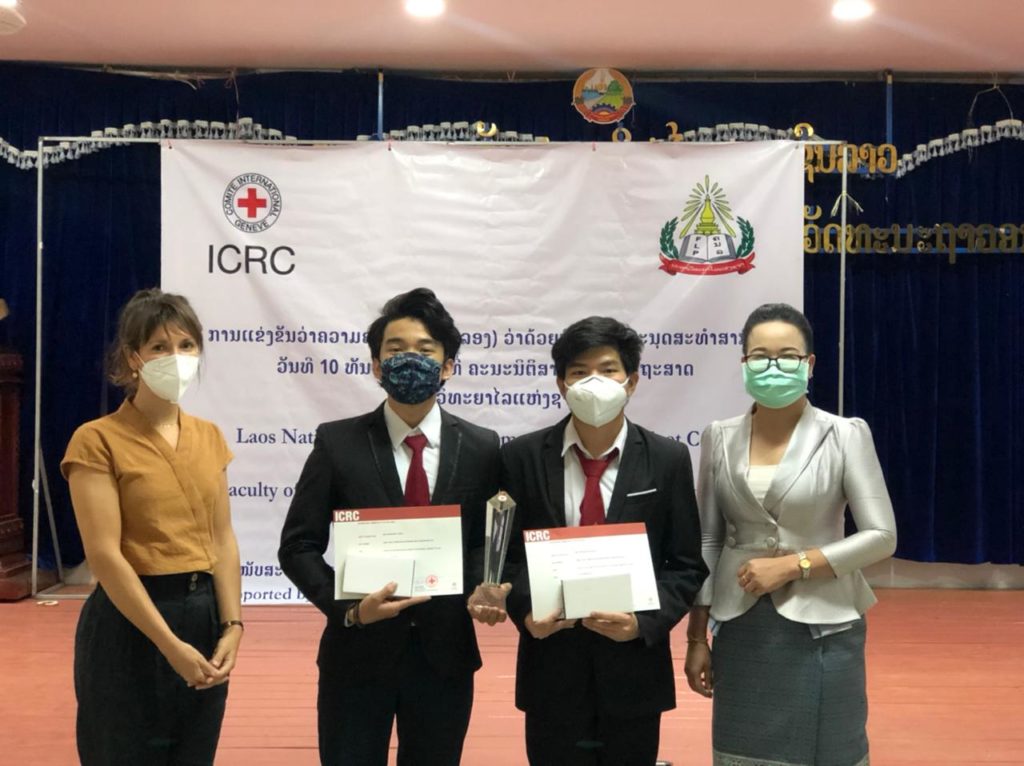
Congratulations to all teams, especially the winning team Mr. Pathanaphone Nammalath and Mr. Silaphet Saenbouttaraj. The team will participate in the International Round of the competition on behalf of Laos in 2022!
ຂ່າວສານ
Under the framework of the Inter-University Cooperation Project, the development of the library is given priority along with the establishment of e-library.
On the 9th of December, a handover ceremony of law books was organised at the Faculty of Law and Political Science (FLP). The ceremony was attended by Assoc. Prof. Viengvilay Thiengchanxay, the Dean of the FLP, Dr. Somdeth Keovongsak, Vice Dean, Dr. Perrine Simon, the Project’s Liaison Officer, along with other FLP lecturers. The Project handed over 391 printed textbooks, in Thai and English, to the FLP, National University of Laos. Along with these books, the University of Luxembourg will also support a one-month capacity building training for FLP librarians in collaboration with Thai librarians as soon as the covid-19 restrictions will be lifted.
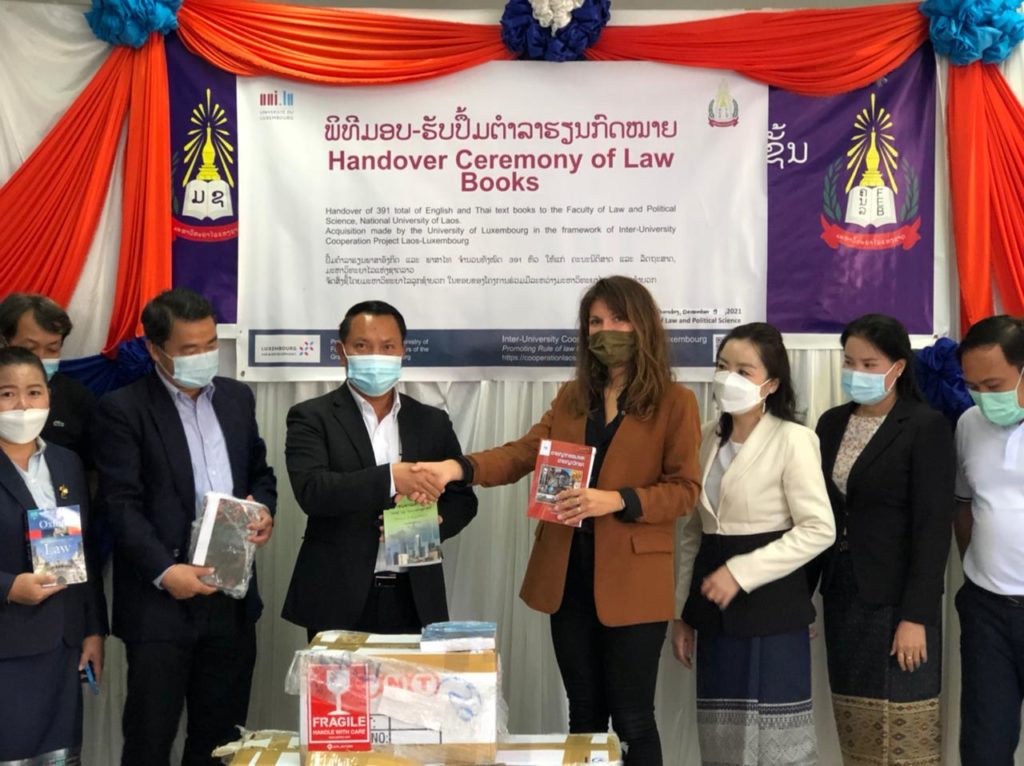
The purchase and delivery of books, as well as the capacity training, were arranged under an agreement between UNI.lu and EIFL-Thailand, a commercial establishment of distribution of educational books and journals. This acquisition and delivery of textbooks and training was fully supported financially by the University of Luxembourg.
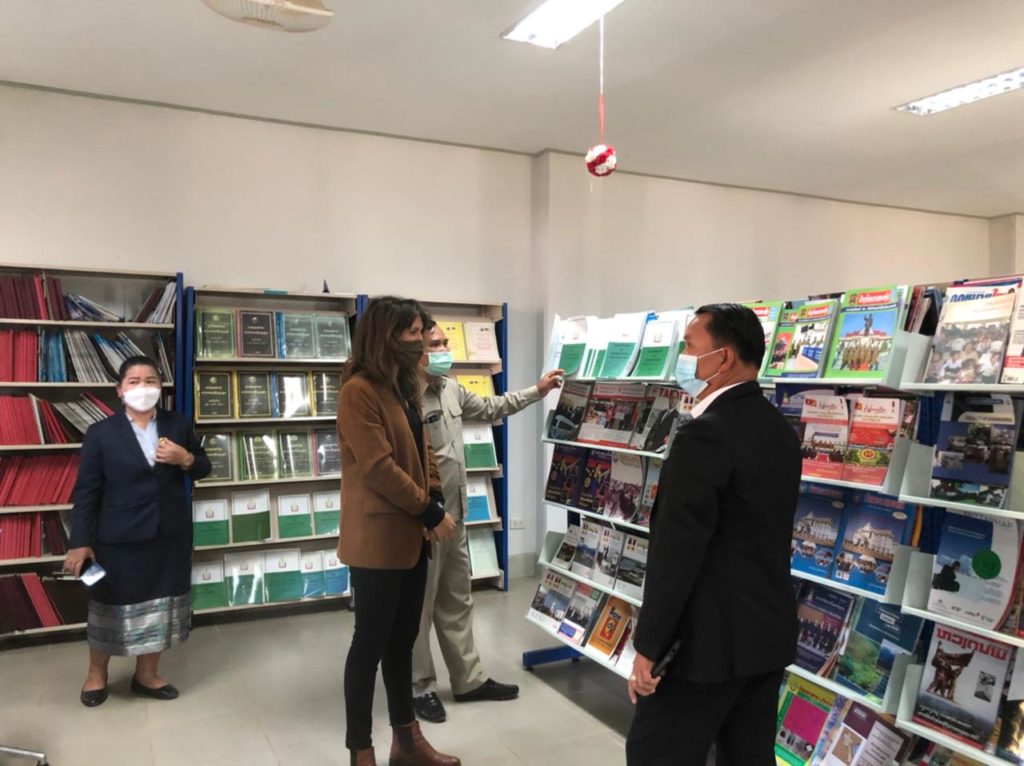
Together with the establishment of the e-library, this acquisition of books will provide the FLP library with a comprehensive collection of books in the field of law. This marks a significant step in improving access to legal knowledge and strengthening legal higher education of both students and teachers.
ຂ່າວສານ
The University of Luxembourg is actively supporting problem-based learning (PBL) through moot court training. The Inter-University Cooperation Project Laos-Luxembourg has provided for the first time this year training support for Lao law lecturers online.
From the 16th of November to the 1st of December, the Project has organised capacity building activity with around 15 lecturers from the FLP of NUOL and Faculty of Law and Administration, University of Champasak. The training was organised online and was led by Dr. Papawadee Tanodomdej from Chulalongkorn University (CU). Dr. Papawadee is a lecturer of Public international law, the coach for Chula’s team in the Philips C. Jessup International Moot Court Competition 2021 and is also actively involved in the Thailand IHL Moot Court Competition organised by the ICRC.
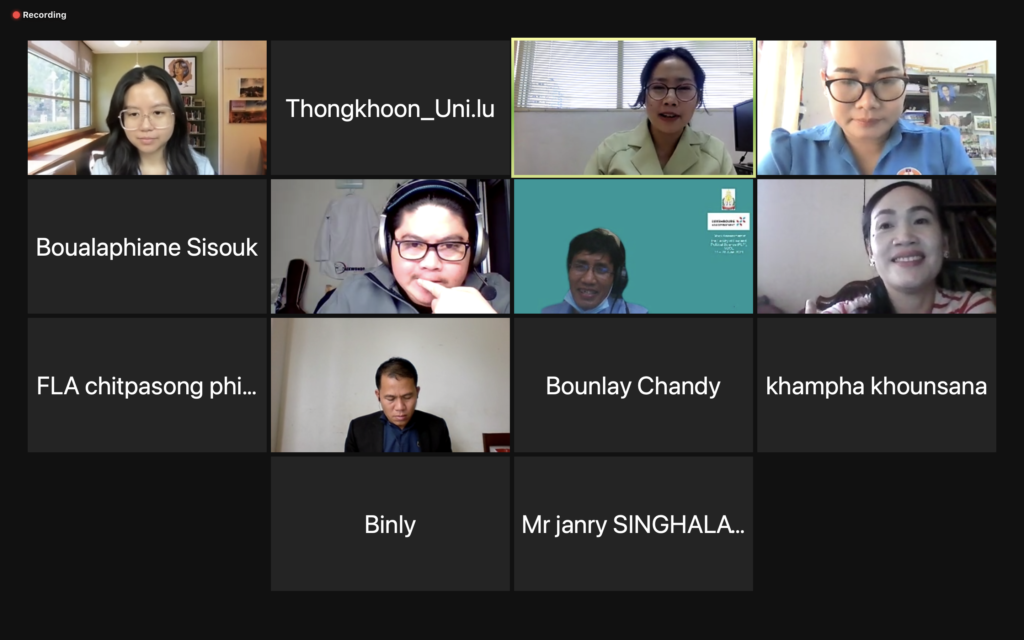
The main objective of this activity was to introduce Lao lecturers to the IHL Moot and to train them into moot court coaching. The training was run in Thai language and covered the basics of moot court competition, public international law and international humanitarian law. During the training, participants also had an opportunity to work in teams in break-out rooms and evening homework to prepare legal arguments. This practical aspect of the training helped participants to understand more in-depth how moot court works. Dr. Papawadee also shared her experience as a coach in Thailand and how they have set-up an IHL Moot Court in Thai language, which led to increase the number of universities competing and teams.
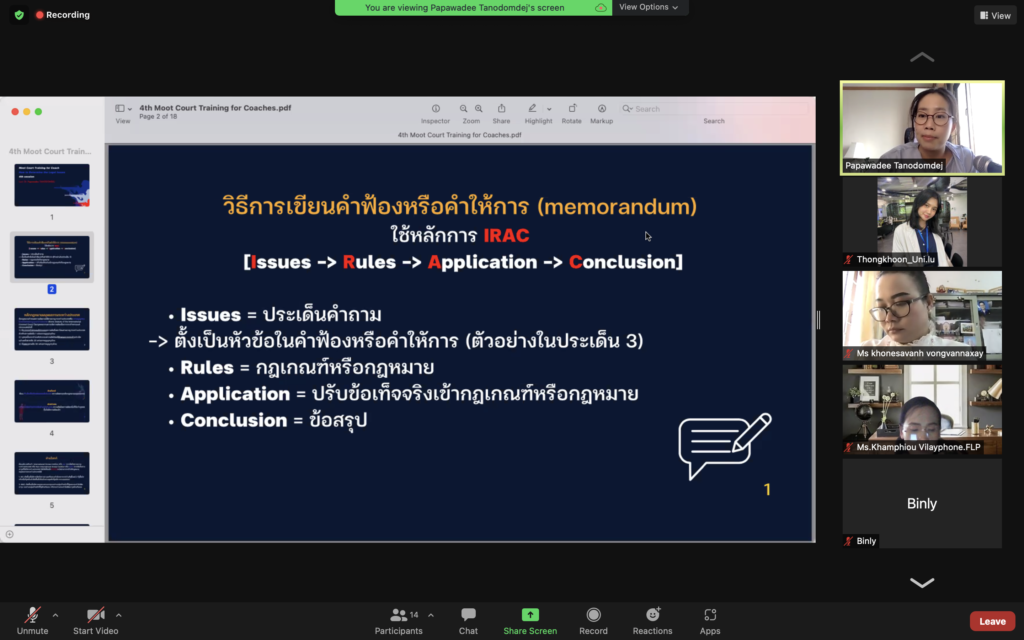
Over the past five years, the coaching of Lao team for the Asia-Pacific IHL Moot Court Competition has been supported by the Liaison Officer of the Project. We aim for the next years to involve Lao lecturers in the coaching of students more!
ຂ່າວສານ
Under the framework of the Inter-University Project Laos-Luxembourg, the University of Luxembourg has been supporting students’ training in the ICRC IHL Moot Court Competition since 2016.
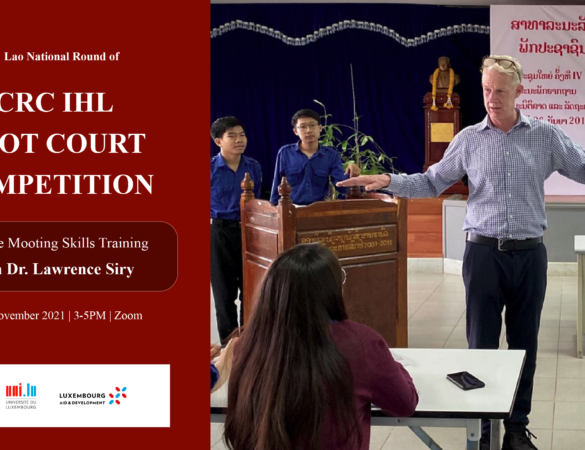
This year, because of the COVID-19 restrictions in place, the intensive Moot training was organised online via Zoom from the 22nd through 26th of November. Dr. Lawrence Siry, who has been involved in the moot training for the past three years, gave a one-week intensive training with a group of 10-12 FLP students. This is to prepare the students for the Lao National Round of ICRC IHL Moot competing on the 10th of December. The training focused on teaching students how to do a convincing pleading and critically present arguments. Students also learned more deeply about International humanitarian law and International criminal law, as well as its application to the Moot problem of this year.
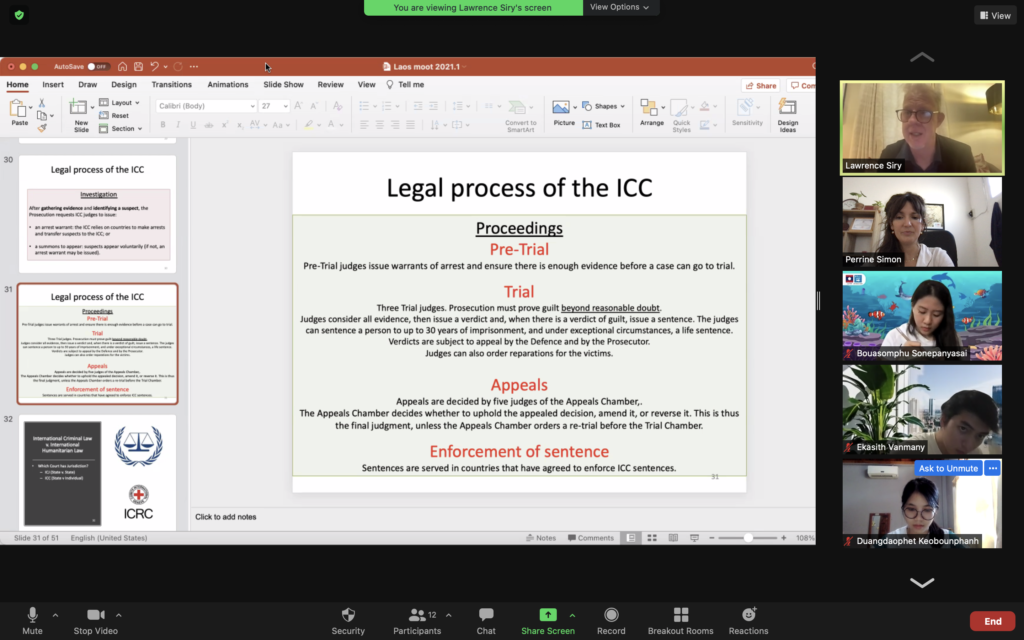
Moot court competitions as an extra-curricular activity not only encourage “problem-based learning” but also promote practice-relevant teaching. By participating in moot court, students get to develop legal and debating skills along with their English skills!
ຂ່າວສານ
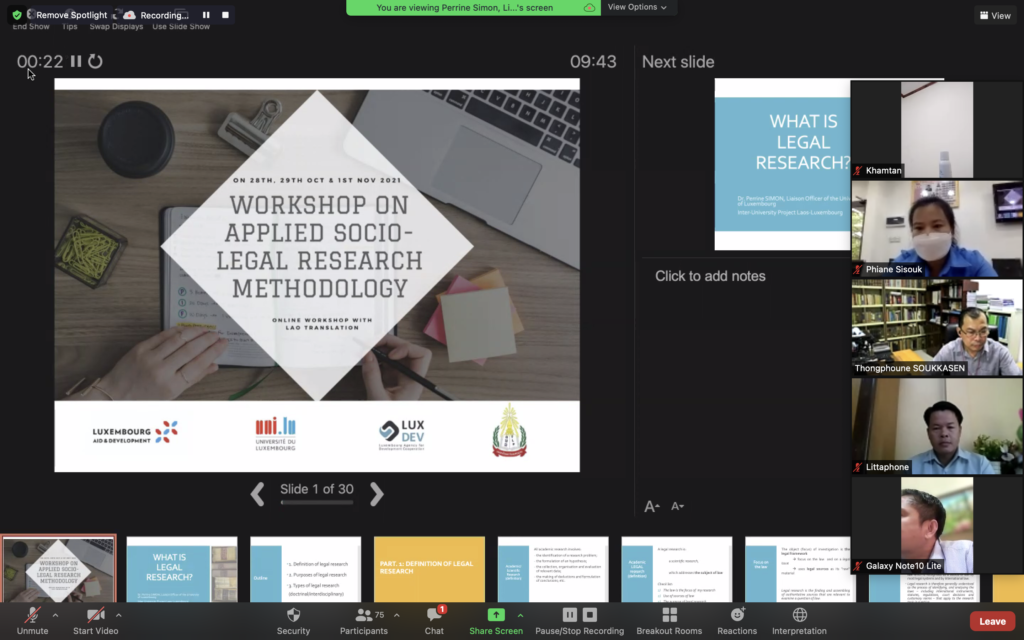
The University of Luxembourg keeps supporting legal research in Laos. A three-day workshop was co-hosted online by the University of Luxembourg Inter-University Cooperation Project Laos-Luxembourg and Luxembourg Development’s Project LAO/031 dedicated to legal research methodology on 28th-29th October and 1st November 2021. The event took place via Zoom and was chaired by Dr Somdeth Keovongsack, Vice Dean of the FLP. The workshop brought together 95 Lao lecturers from the FLP (National University of Laos), the Faculty of Law and Administration (FLA-Champassak University) and the National Institute of Justice (NIJ).
The workshop focused on the methodology applicable to scientific research in the field of law, in particular on what is legal research, what are the sources used in this discipline and on different types of legal research existing (doctrinal or more inter-disciplinary). It also covered more general aspects such as plagiarism, or how to structure a law paper including advice on how to write an introduction, etc. The workshop was the first presentation of the draft “Guidelines on Academic Legal Research Methodology” that have been prepared with the support of Dr. Perrine Simon, the Liaison Officer of the University of Luxembourg. Presentations were led by the “team” involved in the drafting of these guidelines including Dr. Perrine Simon, Dr. Latdavanh Donkeodavong, Dr. Boualaphiane Sisouk, Dr. Sypha Chanthavong, and Pangthong Xayyavong.
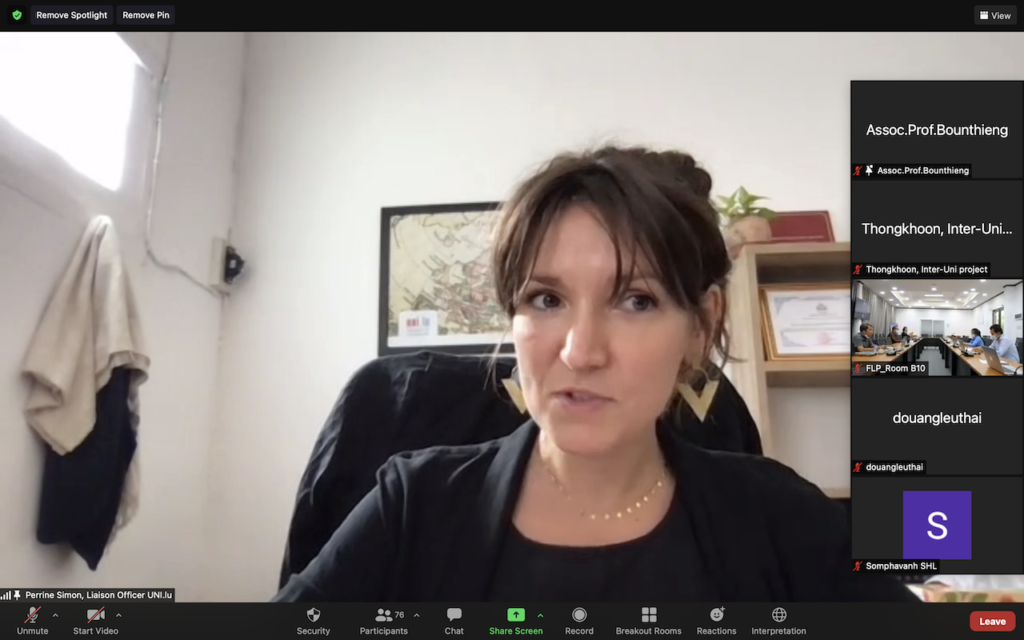
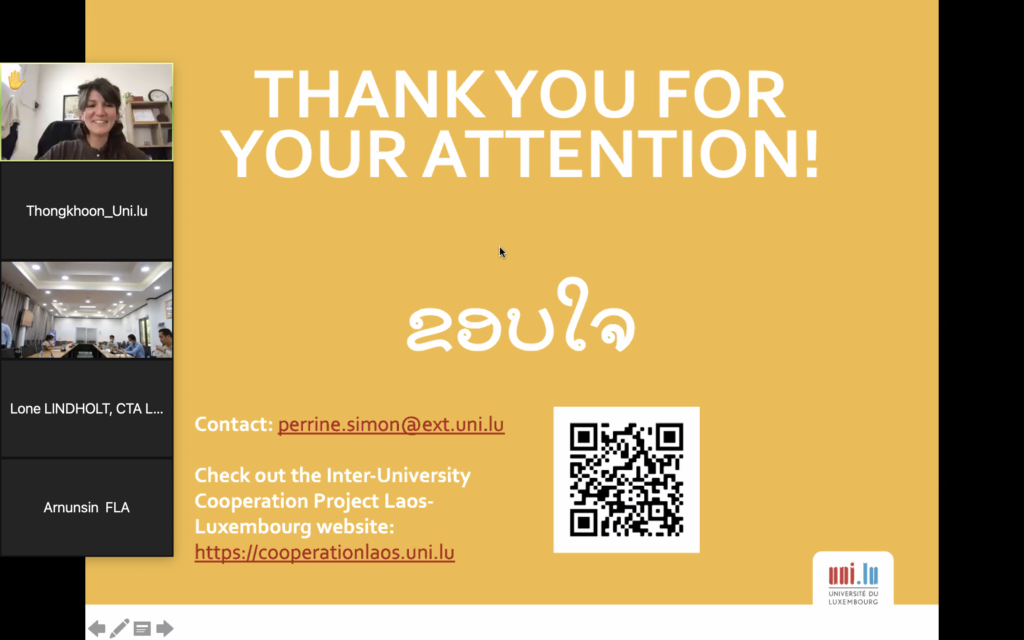
The guidelines are expected to be finalised for dissemination at the beginning of the 2nd semester of this academic year (2022), in both an English and a Lao version. They could lead the way for Lao legal research and also be relevant for other institution such as the FLA and NIJ. Participants highlighted during the workshop the need to have a “manual” to help them and to have a less fragmented approach to legal research in Laos.
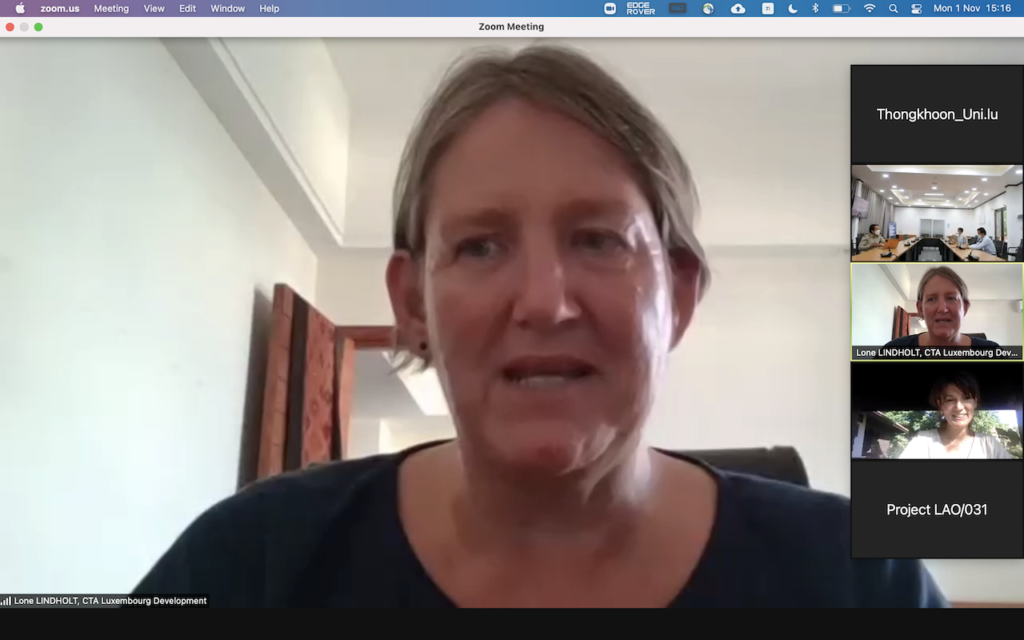
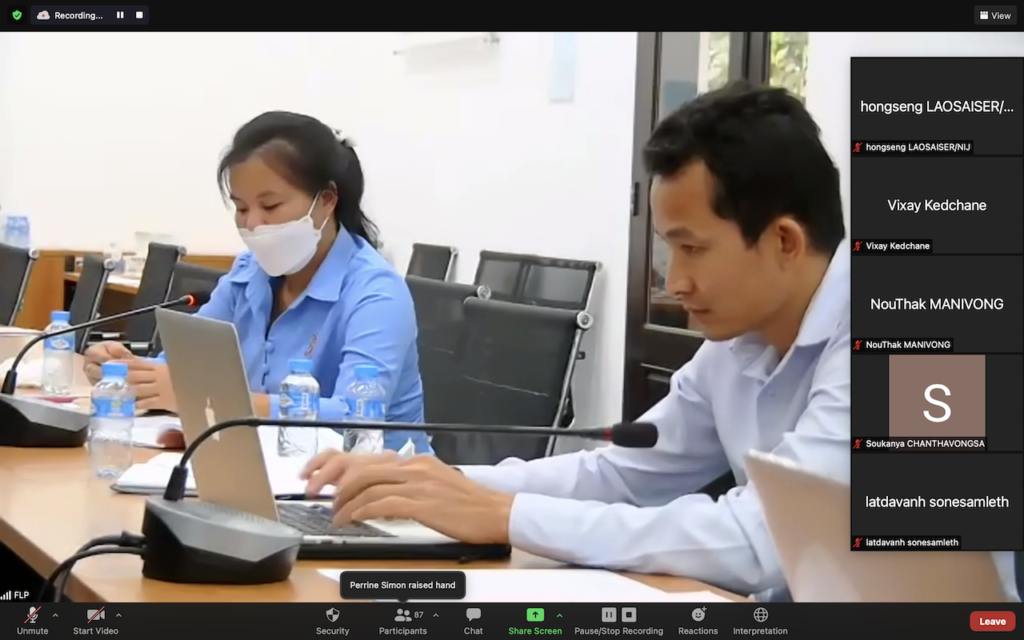
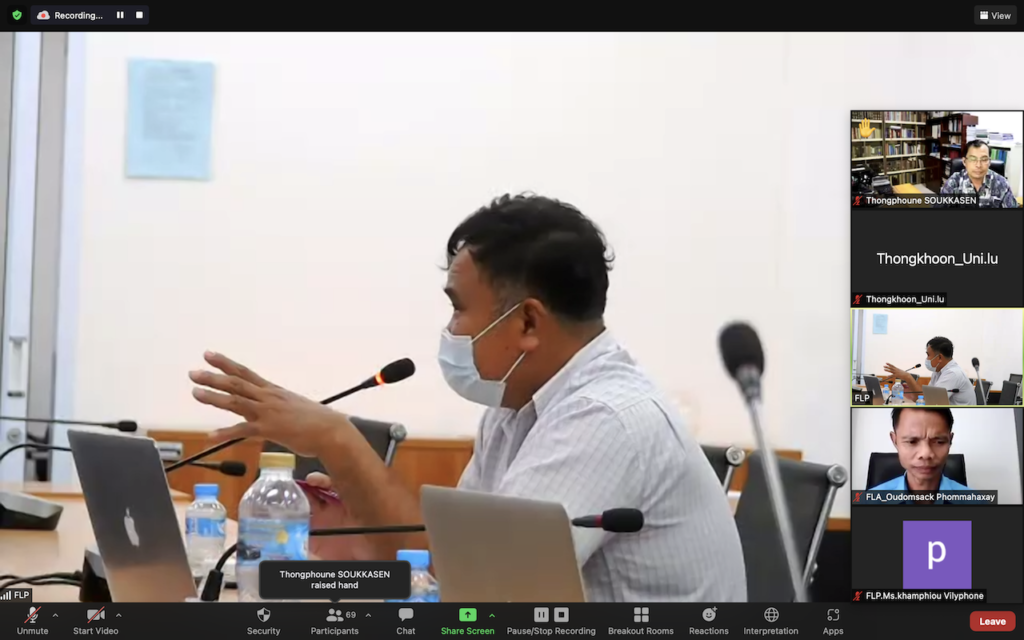
On the third day of the Workshop, participants were divided into groups to do an exercise led by Dr. Lone Lindholt (Chief Technical Advisor of Project Lao/031). In breakout rooms, participants worked together and listed the challenges they are facing in conducting legal research. They highlighted a number of contextual, institutional and individual challenges, such as access to sources (in particular courts’ decisions), access to funding, lack of research opportunities, overwhelming admin duties, etc. They also suggested a number of concrete solutions for the future, including the creation of a Lao platform to disseminate legal research outputs in Lao language.
During the workshop, participants had an open-minded approach and actively engaged in constructive discussions. Many questions were raised regarding legal research and methodology, academic integrity and plagiarism as well as how these may apply in the context of Lao academia.

This was a very fruitful and unique workshop as it was gathering the whole (future) “Lao research community” – FLP, FLA and NIJ – and emphasised the need for further collaboration in order to encourage quality legal research.
Lastly, at the end of the workshop, participants were encouraged to submit their applications for the 3rd Annual Research Forum which will take place on 15th of December (deadline extended to 15th of November).
ຂ່າວສານ
In cooperation with the Faculty of Law and Political Science, NUOL and the ICRC, an online lecture on International Humanitarian Law (IHL) was organised on the 6th of November via Zoom with the support of the University of Luxembourg. Nearly 90 participants attended the lecture, including students and lecturers from the FLP.
The lecture was given by Mr. Sippakorn Chongchuwanich, Legal Advisor from the ICRC Bangkok. During the lecture, participants learned about the fundamentals of IHL as well engaged in creative discussion regarding the law and its application.
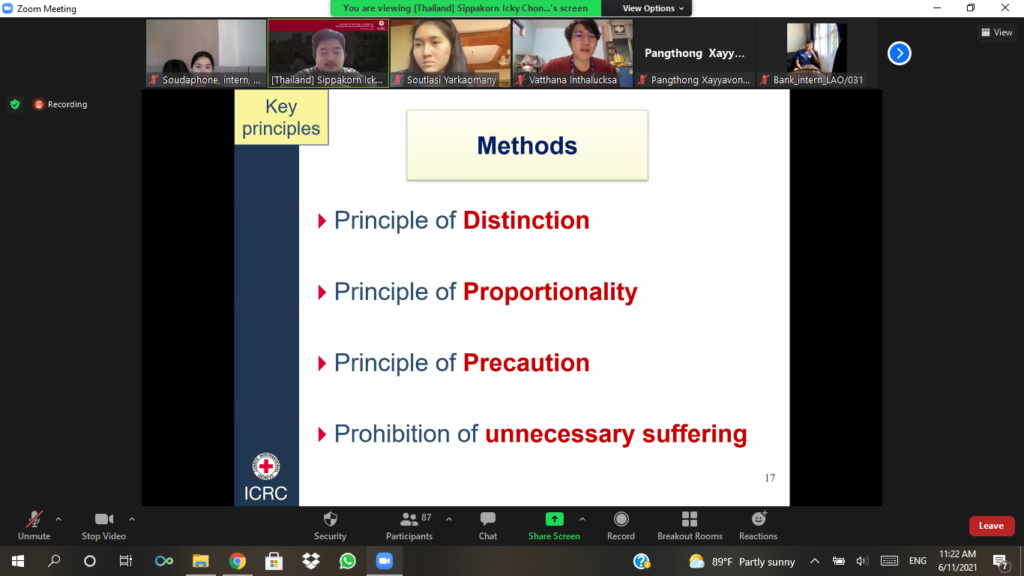
The lecture was not only to introduce students to IHL, but also to officially announce the start of the Lao national round of the ICRC IHL Moot Court Competition. The Competition is co-organised annually by the Hong Kong Red Cross and the International Committee of the Red Cross (ICRC). In the competition, teams of two mooters will participate in a simulation of the proceedings of the International Criminal Court (ICC), including the drafting of memorials and pleading (oral argument).
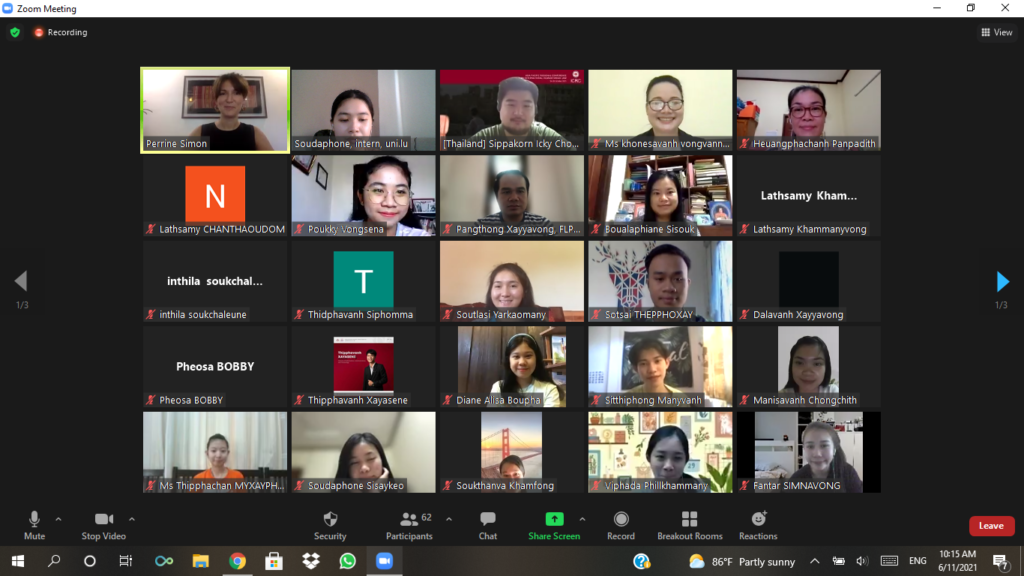
The University of Luxembourg supports problem-based learning and this IHL moot court is a very useful activity for students in the field of law to learn through problem solving. It is also a great opportunity to develop oral skills including debating skills, English speaking and to improve their legal skills in a practical and fun way!
The Lao National Round of the ICRC IHL competition is set to take place online on the 10th of December 2021. Please sign up here. The moot problem can be accessed the links below.