Call For Applications International Humanitarian Law (IHL) Moot Court Competition 2024

We are thrilled to announce that applications are now open for the International Humanitarian Law (IHL) Moot Court Competition 2024! This competition is an excellent opportunity for law students to immerse themselves in the world of international humanitarian law, improve their legal knowledge and advocacy skills, and gain invaluable hands-on experience in constructing and presenting legal arguments.

What is the IHL Moot Court Competition?
The Lao PDR International Humanitarian Law (IHL) Moot Court Competition is a simulated court proceeding where students participate in preparing and arguing a legal case in front of judges. This academic event aims to promote IHL principles, enhance students’ legal and advocacy skills, and foster connections among IHL experts in Laos and Asia. Co-organized by the International Committee of the Red Cross (ICRC), the Inter-University Cooperation Project Laos-Luxembourg, and the Faculty of Law and Political Science at the National University of Laos, the Lao PDR IHL Moot Court Competition serves as a national qualifier for the Red Cross IHL Moot Court Competition in Hong Kong.

Key Steps and Timeline:

● Registration Deadline: The registration form will close on 21st October 2024 at 5:00 pm. Make sure to apply before the deadline!
● Moot Court Training: Join us on the 25th and 26th of October 2024 at the FLP for comprehensive training sessions. This training is designed to prepare you thoroughly for the competition by enhancing your legal research, writing, and oral advocacy skills.
● Memorial Submission: The deadline for submitting your memorials is 15th November 2024.
● National Round: The National Round of the Moot Court Competition in Lao PDR will be held during the week of 2nd to 6th December 2024 at the FLP. The winning team of this round will have the opportunity to compete in the International Round of the Competition.
● International Round: The International Round will take place in March 2025 in Hong Kong.

Competition Details:

● Team Composition: The competition is open to teams of two or three applicants. Applicants who register individually will have the opportunity to find partners during the training sessions, subject to the availability of other individual participants.
● Competencies: While the competition is open to all, we strongly encourage participants to have prior experience in law studies and a high proficiency in English, as all sessions will be conducted in English.

Submit your application today!

Access the registration form by scanning the QR code below:

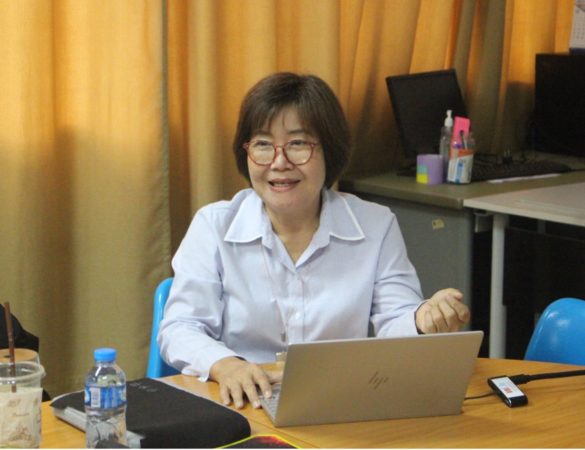
At our fourth “Lunch and Learn” session, Teacher Ms. Vilay kindly offered to speak about her research project, which is supported by Uni.lu (small research grant). She gave an engaging presentation, sharing her research interests, key information from articles she has read, and details about the work she plans to do. Ms. Vilay also asked everyone for their feedback on her presentation and research ideas, making the session interactive and open to suggestions.

During the session, everyone had a great discussion about her topic. They talked about how to use Google to find helpful references and discussed the different rules and regulations researchers need to follow in countries like Thailand, Vietnam, Japan, and Laos.

Participants also suggested ways for Ms. Vilay to use the E-Library to find more resources for her research. Some teachers advised her that it might be better to focus on one country for her references to avoid getting overwhelmed with too much information. The session was lively, and everyone enjoyed being part of the conversation.

The “Lunch and Learn” series aims to give teachers and academics a chance to share their ideas, research, and passions in a relaxed setting. These sessions are an opportunity for everyone to learn from each other and grow together. The Inter-University Cooperation Project hosts these sessions once a month, with a different teacher or academic presenting each time.

Overall, the session was a great success. It not only provided valuable insights for Ms. Vilay but also allowed participants to learn from each other’s experiences. We look forward to more of these enjoyable and educational sessions in the future.

Following the success of the previous “Lunch and Learn”, the Inter-University Cooperation project held its third Lunch and Learn session on July 24, 2024, at the Faculty of Law and Political Science (FLP). Four lecturers and researchers from FLP participated in this event. This session also marked the first-time participation of Gwendol, a new liaison officer.

The session began with Pangthong, a PhD student at the University of Luxembourg, presenting on the crucial topic of ‘public participation’ and its role in strengthening the rule of law. Pangthong’s presentation included a thorough background on public participation, its significance, and the current state of public participation in Laos. He highlighted various issues and challenges related to public participation in the country, which sparked a dynamic and lively discussion among the participants. They exchanged ideas and debated the issues faced in Laos, exploring potential solutions.

Pangthong also offered recommendations based on his research and shared his insights with the participants. Following the presentation, Paulina provided positive feedback, commending Pangthong for his well-researched and well-structured presentation. Gwendol suggested that Pangthong include specific examples of public participation in Laos to enhance understanding for the participants.

We were thrilled with the positive feedback from the participants. It was especially great to see everyone spoke in English during the discussions, adding an extra layer of inclusivity and engagement.

Stay tuned for more activities and future Lunch and Learn sessions!

Following the success of the first Lunch and Learn session in May, the Inter-University Cooperation Project held its second session on June 21, 2024, at the Faculty of Law and Political Science (FLP). Five teachers and researchers from FLP participated in this event.

Following the success of the first Lunch and Learn session in May, the Inter-University Cooperation Project held its second session on June 21, 2024, at the Faculty of Law and Political Science (FLP). Five teachers and researchers from FLP participated in this event.

During the discussion, Paulina encouraged participants to conduct thorough research that analyze the advantages and disadvantages of incorporating such an article and to publish their findings to support the government’s consideration of amending the Constitution. Amending the Constitution to include a provision for suing the government would enhance transparency, accountability, and the rule of law in Laos.

We were thrilled with the positive feedback from the participants. It was especially great to see everyone spoke in English during the discussions, adding an extra layer of inclusivity and engagement.

Stay tuned for more activities and future Lunch and Learn sessions!

We are excited to announce the successful launch of our “Lunch and Learn” series. The first “Lunch and Learn” session was held on May 15, 2024, at the Faculty of Law and Political Science (FLP). Six teachers and researchers from FLP joined us for this activity.

Teacher Ms. Khampeiw volunteered as speaker for the first “lunch and learn” session, and she did a fantastic job sharing her experiences from a recent researcher seminar in Thailand. Her insights sparked engaging discussions among the participants. She shared her newly acquired knowledge on academic writing, how to draft research proposals and recounted her insights from presenting her research proposal to the audience and receiving feedback. She further informed the participants of the “lunch and learn” session that the research seminar she attended is a yearly event and instructed them how to apply for upcoming events.

During the session, participants discussed some of the challenges faced by Lao researchers, such as the lack of information sources for research topics and language barriers. Everyone thoroughly enjoyed the opportunity to share and learn from each other in this informal setting.

Furthermore, we had the pleasure to welcome Mr. Pangthong Xayyavong, who is a teacher at the FLP and is currently pursuing his PhD at the University of Luxembourg through the scholarship from the Inter-University Cooperation project. The “lunch and learn” was a great opportunity for his colleagues to ask and exchange about his experience in Luxembourg in an informal setting. The participants discussed the differences and similarities between the University of Luxembourg and the National University of Laos in terms of research facilities and methods and asked Pangthong many questions about his life in Luxembourg.

The “Lunch and Learn” series is designed to provide a platform for teachers and researchers to share their experiences, knowledge, research, and interests with each other. The Inter-University Cooperation Project will host this activity once a month, with a different presenter each time to create an opportunity for sharing between teachers and researchers.

We were thrilled with the positive feedback from the participants. It was especially great to see everyone spoke in English during the discussions, adding an extra layer of inclusivity and engagement.

Stay tuned for more activities and future Lunch and Learn sessions.

The Inter-University Cooperation Project has allocated several scholarships to qualified young law researchers from the National University of Laos to pursue a doctoral degree at the University of Luxembourg in its new phase 2021-2024 and 2024-2027. The candidate will be selected by based on its research proposal, previous experience in legal research and proficiency in English.

In 2021, a Lao candidate was selected to enroll as a PhD student at the Faculty of Law, Economics, and Finance in Luxembourg. Mr. Pangthong Xayyavong, an FLP lecturer, was selected to receive a PhD scholarship through the Inter-University Cooperation project. He began his PhD studies at the University of Luxembourg since October 2022 and is set to continue his studies until 2026. Pangthong is an active researcher who has contributed a lot to the research community at the University of Luxembourg.

His research focuses on Laos’ legal framework for foreign investment and the protection of the environment, with a specific emphasis on the mining sector. The aim of his research is to contribute to legal development in Laos by enhancing the consistency, coherence, and clarity of laws related to investment promotion, environmental protection, and minerals. This research is expected to be Highly beneficial for Lao PDR as a whole.

In November 2023, Mr. Pangthong successfully presented his first research progress report.

Stay tuned stay for updates on Pangthong’s study progress in Luxembourg!

From June 14th to 19th, excluding the weekend, the Faculty of Law and Political Science in Vientiane hosted a workshop on Clinical Legal Education (CLE). The event, facilitated by Professor Elise Poillot from the University of Luxembourg and Mr. Fabrice Hénard, an international expert in higher education quality assurance and TTVET, and CEO of the International Network of Quality Assurance Agencies, aimed to enhance the CLE programme and the capacities of teachers involved in CLE at the FLP and to contribute to a platform for teachers’ exchange with professors from Luxembourg University.

Nineteen teachers from five departments, the FLP CLE, the Academic Division, and other teachers with a CLE background participated, sharing their knowledge and experiences. Professor Elise and Mr. Fabrice discussed CLE in Luxembourg and Europe, while FLP participants shared their insights on CLE at the FLP.
The discussions centered on setting appropriate standards for CLE programmes, comparing European standards with those at the FLP, and identifying beneficial standards for adoption. During the second day, participants shared their ideal set of standards for the legal clinic and discussed potential challenges in adopting and implementing these standards.

On the last day, seven participants from the FLP—Mr. Pangthong, Ms. Thasanalone, Mr. Intha, Ms. Duangmala, Mr. Phanthasack, Ms. Vilay, and Ms. Khampheiw—gave short presentations addressing the following questions: What were the most significant points raised during this seminar that will benefit your clinic? Among the topics covered, which would you have liked to explore in more depth (e.g., clinical program content, implementation of standards, etc.)? How do you envision the follow-up to this seminar in terms of collaboration between the Luxembourg clinic and your clinic?

Participants expressed a keen interest in further exploring topics like clinical program content and standards implementation. They also emphasized the importance of ongoing collaboration between the Luxembourg and Laos CLE programs.
Feedback highlights included positive remarks on the workshop’s content, noting that it would improve their work quality in CLE. The knowledge-sharing sessions were particularly useful, and participants expressed a desire for more workshops on Clinical Legal Education, believing that additional training would further enhance their skills and understanding of best practices in CLE.

The Inter-University Cooperation Project organized its 7th Summer Law School from 21st to 24th May 2024 in Vang Vieng, Laos. Eleven candidates from the Faculty of Law and Political Science (FLP), of the National University of Laos were invited for this intensive 4-day seminar based on their interest in improving their legal knowledge and their involvement with the Inter-University Cooperation Project.

The Summer Law School was dedicated to “the importance of sovereignty in the transformation of the Lao People’s Republic into a Constitutional State”. The Summer Law School was taught in English with contributions from Prof. Stefan Braum (Project leader, University of Luxembourg), Ms. Melina Anastasopoulou (PhD, University of Luxembourg), Ms. Isabella Lorenzoni, (PhD, University of Luxembourg), Ms. Zahra Yusifli (PhD, University of Luxembourg), Ms. Vialy Langkavong (FLP), Ms. Boualaphiane Sisouk (FLP), Mr. Pangthong Xayyavong (FLP and University of Luxembourg), Mr. Intha Douangphila (FLP), Dr. Lone Lindholt (SSA, LAO/037) and Ms. Paulina BASCHTON (Liaison Officer for the Inter-University Cooperation Project).

The first day of the Summer Law School, started with opening remarks by the project leader Prof. Braum and the Vice Dean of the FLP, Prof. Thatsanalone; and followed by an introductory session by Prof. Braum familiarizing the participants with “the matrix of sovereignty” a graph that was developed by Master students at the University of Luxembourg, together with Prof. Braum, to illustrate characteristics of sovereignty. Prof. Braum linked the theme of this year’s Summer Law School to the discussions from the 6th Winter Law School in December 2023, which addressed Laos’ sovereignty challenges arising from geopolitical factors. The introductory session created a common understanding of the notion of sovereignty. Participants actively discussed the “matrix of sovereignty” and tried to place Laos on the matrix.

On the second day of the Summer Law School, Ms. Melina Anastasopoulou gave a presentation on fundamental concepts of sovereignty. She covered both traditional and modern perspectives of sovereignty. Additionally, she explored the formation of nation-states and the internal and external aspects of sovereignty. Following this, Ms. Vilay Langkavong, a colleague from the National University of Laos, presented on ‘Sovereignty in the Laotian Constitution.’ Ms. Langkavong introduced the participants to the constitutional articles that define sovereignty.

In the afternoon Ms. Isabella Lorenzoni presented on the topic of sovereignty in the international legal order and the European Union. Participants discussed how international factors influence national sovereignty. In this context Prof. Braum recalled the challenges associated with the definition of the concept of proportionality in the Lao context; a concept, which has been discussed extensively during the last Summer Law School in June 2023. The day ended with a presentation by Ms. Boualaphiane Sisouk (FLP) discussing “Lao PDR in the context of ASEAN – what is the future for Lao sovereignty”.

Day 3 of the Summer Law School started with a discussion on ASEAN decision making mechanisms, its influence on Laos and sovereignty, relating to the presentation by Ms. Sisouk. This was followed by a presentation by Ms. Anastasopoulou on climate change and erosion of sovereignty leading to engaged discussions of environmental challenges in Laos. The following presentation was given by Ms. Zahra Yusifli on “Poverty Reduction and the Protection of Vulnerable People”. Ms. Yusifli highlighted the root causes of poverty and posed critical questions to our Lao colleagues about strategies to uplift the quality of life for concerned citizens. The session was highly interactive, with active participation from the Lao colleagues who shared their perspectives on how Laos can progress and overcome poverty.

In the afternoon Ms. Lorenzoni conducted a session on “sovereignty in times of digitalization and AI”. She familiarized the participants with the concepts of cyberspace and discussed the impact of Artificial Intelligence on sovereignty. Following Ms. Lorenzoni, our Lao colleague, Mr. Pangthong Xayyavong, gave a presentation on the “Challenges for Lao PDR and Legal Frameworks to Manage Global Risks”. He outlined the specific challenges that Laos faces and the critical role of lao legal framework in managing these global risks. The day ended with a presentation from Ms. Yusifli on State Sovereignty, Self-Determination, and Geopolitics. She addressed the jurisdictional limits of sovereignty in international law (international treaties, agreements, and conventions) and emphasized current events that exemplify the use of self-defense claims to protect sovereignty under Article 51 of the UN Charter.

On the last day of the Summer Law School, Mr. Intha Douangphila delivered an insightful presentation on the sovereignty of Laos in its external relations with countries in Asia and Europe. He discussed how Laos engages in cooperation and external relations. The seminar concluded with a round-table discussion, where all participants were invited to reflect on the lessons and points discussed over the four-day seminar.

All participants showed enthusiasm and motivation during the event and energetically interacted with the guest speakers and each other. They gained an understanding of the significance of the concept of sovereignty in a rule of law state.

Congratulations to the Lao team participating in the 22nd Red Cross International Humanitarian Law (IHL) Moot Court 2024 in Hong Kong. The international competition of the acclaimed IHL Moot Court took place between 6 – 9th March 2024 in Hong Kong. The competition hosted 22 teams of law students from different universities across the Asia-Pacific Region. The Inter-University Cooperation Project has been actively supporting the participation of students from the Faculty of Law and Political Science, Vientiane (FLP) in this international competition since 2018. For this year, the team of students from the FLP was coached and supported in participating at the International moot court competition by Dr. Perrine Simon (coach) and Ms. Paulina Baschton (Liaison Officer of the project).

The Lao team has been trained intensively until the last day of the competition after winning the National Round in December 2023. They worked extremely hard and put a lot of effort into this highly competitive moot court. Although the team from the National University of Laos did not advance to the quarterfinals, the team garnered positive feedback from judges, showcasing their oral pleading skills. Moreover, the team received a good scoring in the written memorials with an average of good-good+. It is also notable that the Lao team met the team from the Philippines (the team that later won the overall competition) in the very first round and did a very good job pleading against such a strong team. 

After four days of competition, with a total of 22 teams of law students from across the Asia-Pacific region, the University of San Agustin (Team from the Philippines) won the competition. The first runner-up was awarded to Thammasat University. Ms. Samantha Grajo from the University of San Agustin was awarded the Best Mooter of the Final Round. Tribhuvan University received the award for the best prosecution memorial, while the University of Adelaide was honored with the best defense memorial. For more details on the 22nd IHL Moot Court competition results and announcement, follow the official link here: https://www.redcross.org.hk/en/moot22/results.html

This year’s moot problem presented a complex scenario revolving around a conflict between traditional religious values and economic development. It involved allegations against a religious leader for crimes against humanity and war crimes, including the purchase and use of drones and cluster munitions resulting in civilian harm, as well as the recruitment of minors for hostilities. The problem addressed contemporary issues such as the use of drones and cluster munitions in warfare.

During the days of the event, students had the opportunity to attend the Keynote Seminar on “Urban Warfare and the Relevance of IHL in Preventing and Reducing Civilian Harm”. The panel discussion of this Keynote Seminar was led by Ms. Marwa Shabbar (Head of Legal Department, Regional Delegation for East Asia, The International Committee of the Red Cross) and Dr. James Fry (Associate Professor of Faculty of Law, The University of Hong Kong). At the end of the session, participants had a chance to raise their question and to discuss with the panelists.

This Moot court organised by the ICRC is a great way to stimulate legal thinking, by learning how to develop legal arguments appropriately. Students also have improved their critical thinking and problem-solving skills, analyzing skill, presentation skills, debating skills and also their English language skills!
We are very proud of the Lao team of 2024!

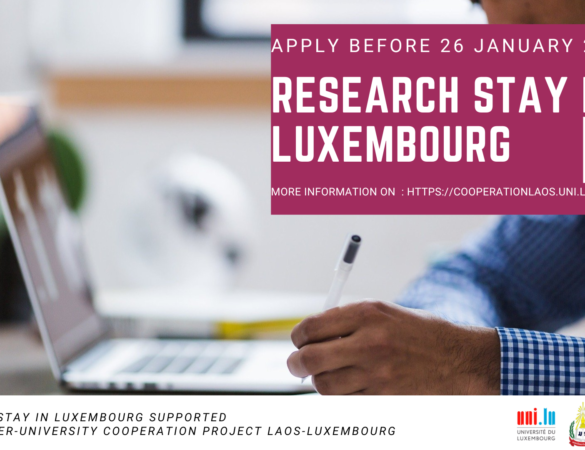
The University of Luxembourg is proud to announce the opening of applications to grant two candidates for a legal research stay in Luxembourg, which will take place in May-June or October-November 2024.

The Faculty of Law, Economics, and Finance (FDEF) of the University of Luxembourg will provide a friendly international environment in which the selected researchers can gain experience in research methodology, in presenting their research, attending seminars, and develop contacts with Professors of the faculty and other researchers. The research stay aims to enable candidates to finalise and publish an article or a research paper written in English in a law journal.

Criteria

The research stay programme is dedicated to Lao lecturers who desire to gain experience in an international environment to improve their academic and research skills in the legal field, in order to strengthen the capacities of the Faculty of Law and Political Science of the National University of Laos. Applicants must be lecturers at the Faculty of Law and Political Science of NUOL, with at least a Bachelor’s degree in law or with a strong component in law. There are no criteria in terms of age. Candidates will be selected based on merit. The University of Luxembourg will have full discretion in selecting and/or rejecting the applications.

Supervision

The Project will provide thorough research guidance before and during the research stay program. The selected candidates will be supported to carry out their research and be supervised by the Project’s Liaison Officer and Project leader during their stay.

Selected candidates will be required to participate fully in capacity-building activities organised by the Inter-University Cooperation (seminars, research workshops, etc.) also University of Luxembourg. They will be committed to presenting and publishing their research papers in English in a law journal within the designed time.

Selected candidates shall ensure that their research complies with the University of Luxembourg procedures, in particular on research ethics and plagiarism

Administration

The project will facilitate the successful candidate with Visa and Housing applications. All expenses (travel, accommodation and per diem) will be covered.

The candidates will be entirely responsible for the management of the funding allocated; no extra-costs will be borne by the Project.

Application

The application must be written in English and should encompass:

– A CV with full contact details;

– A motivation letter;

– A description of the research subject and methodology (maximum 500 words).

Application deadline: 26 January 2024.

The pre-selected teachers will be invited for an interview at the FLP.

Applications must be sent to the Liaison officer and Project Assistant:

Liaison Officer, Paulina Baschton: Paulina.baschton@ext.uni.lu

Project Assistant: Patthanaphone Nammalath: patthanaphone.nammalath@ext.uni.lu

We are looking forward to your papers and to welcoming you in Luxembourg!

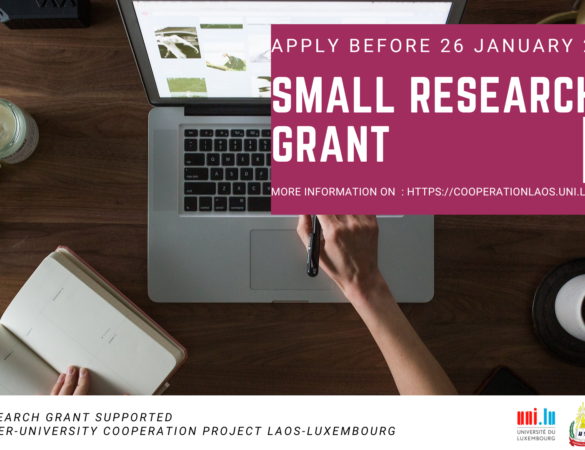
The University of Luxembourg is proud to announce the opening of applications to select academic staff to undertake research in the field of law from the Faculty of Law and Political Science of the National University of Laos to pursue a research project under the supervision of the Inter-University Cooperation Project Laos-Luxembourg.

Criteria

The research programme is dedicated to Lao lecturers to improve their academic and research skills in the legal field, in order to strengthen their research capacities and the capacities of the Faculty of Law and Political Science of the National University of Laos. Applicants must be lecturers at the Faculty of Law and Political Science of NUOL, with at least a Bachelor degree in law or with a strong component in law. There are no criteria in terms of age. Candidates will be selected based on merit. The University of Luxembourg will have full discretion in the selection and or rejection of the applications.

In line with the “Luxembourg General Cooperation Strategy for Sustainable Development – Road to 2030”, the Inter-University Project welcomes research proposals falling under the following themes:

  • Rule of law and governance;
  • Fundamental rights;
  • Gender equality;
  • Environment sustainability and climate protection. 

Supervision

The Project will provide thorough research guidance during the grant period. The selected candidates will be supported to carry out their research and be supervised by the Project through regular meetings to share the progress of their research.

Selected candidates will be required to participate fully in capacity building activities organised by the Inter-University Cooperation (seminars, research workshops, etc) and will be asked to present their research to the public. They will also have to submit progress reports every 3 months, in accordance with the research contract signed with the University of Luxembourg.

Administration

Selected candidates will receive a grant equivalent to 1 200 EUR to complete their research.

The scholarship will be granted by Uni.lu to the lecturer in 4 instalments. Payment of the Uni.lu’ scholarship is based on merit and will be conditional on compliance with the obligations of the researcher set up in the “scholarship agreement” including in particular the submission of advancement reports every 3 months to the Liaison Officer of Inter-University Cooperation Project in Vientiane.

The candidates will be entirely responsible for the management of the funding allocated; no extra-costs will be borne by the Project.

The candidates will conduct their research from Lao PDR.

Selected candidates shall ensure that their research complies with the University of Luxembourg procedures, in particular on research ethics and plagiarism and  the guideline on Legal Research Methodologies.

The research will take the form of a paper written in English(Preferred) or Lao. The length of the final paper will be discussed with the Liaison Officer. The research must be completed within one year from the date of signing the grant contract, and the agreed research outcome submitted.

Applicants can only apply for a funding grant as an individual researcher, not as a team or institution.

Application

The preferable language for the application is English, but it can also be written in Lao and should encompass:

– A cover letter (not to exceed 2 pages);

– A curriculum vitae with full contact details including academic experience (courses taught, previous research experience, university curriculum, etc);

– A research proposal (not to exceed 3 pages including the bibliography) the research proposal should include a description of the research topic (introduction), the hypothesis, research objectives and envisaged methodology as well as a short bibliography (15 references maximum).  

Application deadline:  26 January 2024

The pre-selected candidates will be invited for an interview.

Applications should be submitted to Paulina Baschton: paulina.baschton@ext.uni.lu   and to Patthanaphone Nammalat: patthanaphone.nammalath@ext.uni.lu

Call for application can be downloaded Here

You can look into our MOOC on Legal Research Methodology to effectively get started to design and conduct good legal research.

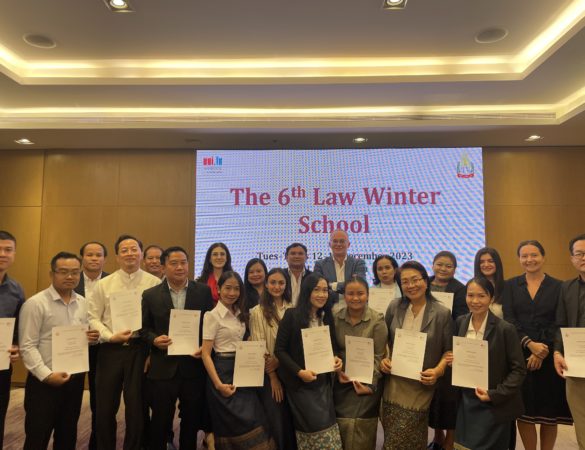
The Inter-University Cooperation Project organized its 6th Law Winter School from December 12th to 14th, 2023, at the Crown Plaza, Vientiane Capital, Laos. Twenty candidates were invited based on their interest in improving their legal knowledge for an intensive 3-day seminar. The 6th Law Winter School included Fourteen law lecturers from the Faculty of Law and Political Science, two lecturers from National Institute of Justice and four practitioners (two judges and two prosecutors).

The Law Winter School was dedicated to the subject of “the Role of Transparency in a Rule of Law State”. The Winter School dealt with the interdependence between good governance and rule of law in relation to the principle of publicity and access to justice, the protection of Transparency by the 3 main branches of the state and good practices of good governance in relation to the international anti-corruption framework. This Winter School was taught in English by Prof. Stefan Braum (University of Luxembourg), Laura AADE (PhD, Uni.lu), Francesca FINELLI, (PhD, Uni.lu), Anna MACHURA (PhD, Uni. lu) and Paulina BASCHTON (Liaison Officer of the Inter-University Cooperation Project in Laos).

Prior to the winter school participants followed a 1 day research methodology seminar to equip the them with relevant legal research skills which could be helpful for their research. Participants learned from examples and experiences from the PhD’s from the University of Luxembourg how to state research problems, find suitable research questions, how to find and use relevant databases, and methods of citation. During the presentations, the participants raised a lot of questions regarding their own research and discussed legal issue in Laos in related to the PhD’s field of expertise.

The first day of the Law winter school, started with opening remarks by the project leader Prof. Stefan Braum and the Dean of the FLP, Assoc. Prof. Viengvilay Thiengchanhxay. The topics presented and discussed during the winter law school centred around the topic of “Interdependences between Good Governance and Rule of law Principles”. On the first day the presentations were the dedicated to the principle of publicity presented by Laura Aade, a presentation by Francesca Finelli on the principle to access to justice and a presentation by Anna Machura-Urbaniak on the “protection of transparency by means of law enforcement by the executive branch”. Participants actively discussed the definition of transparency, the limits of transparency in the context of access to justice, the practices in Laos, and the importance of balancing transparency and privacy.  

Day 2 of the Law winter law school was dedicated to the principles of transparency for the Judiciary and Legislative branch presented by Francesca Finelli and Laura Aade. The participants were assigned hypothetical cases involving the application of the principle of transparency, many scenarios were given by the PhD to equip participants with concrete examples. Prof. Braum showed the participants a matrix for transparency principles for participants to deepen their understanding and to understand the application of these principles for each state actor.

Day 3 was dedicated to “good practice and good government in anti-corruption framework” presented by Anna Machura-Urbaniak. Participants held lively discussions with regards to corruption issues on a global and national scale, they also discussed how they, as legal academics and practitioners, can address this sensitive yet complex topic and help Laos in its move toward a rule of law state. The discussions involved identifying mechanisms used in Luxembourg and sharing experiences in relation to the progress the Lao government has already made in this regard. This Law Winter School ended with a round-table reflection, which allowed participants to discuss how to enhance the teaching and research of the principles of transparency.

All participants showed enthusiasm and motivation during the event and energetically interacted with the guest speakers and each other. Participants learned to understand the importance of transparency in a rule of law state. All participants were provided with learning materials to support and strengthen their knowledge.

On the 6th of December 2023, the Lao National round of the ICRC International Humanitarian Law Moot Court competition took place at the Faculty of Law and Political Science (FLP) organised by the University of Luxembourg through the Inter-University Cooperation Project.

This year, three teams, representing in turn the Defence and the Prosecution, competed against each other. As usual, the fictitious case on which teams were pleading in English was set before the International Criminal Court (ICC). Judges for this year’s national round of the competition included Mr. Jirat Jitwarawong from International Committee of the Red Cross (ICRC) Regional Delegation Bangkok (Legal Adviser) and Ms. Sophia Cason from The Asia Foundation (Chief of Party, Laos Legal Aid Support Program).

The University of Luxembourg organized and financially supported this year’s IHL Moot Court competition. Dr. Lawrence Siry devoted considerable effort in training all participating teams. His weekly online training sessions were instrumental in shaping the legal minds that would grace the courtroom.

This IHL Moot court is a great way to stimulate legal thinking, by applying legal reasoning and learning how to develop arguments appropriately. Students also improved their presentation skills, debating skills and English! After years of virtual pleadings, the winning team is going to Hong-Kong in March 2024.

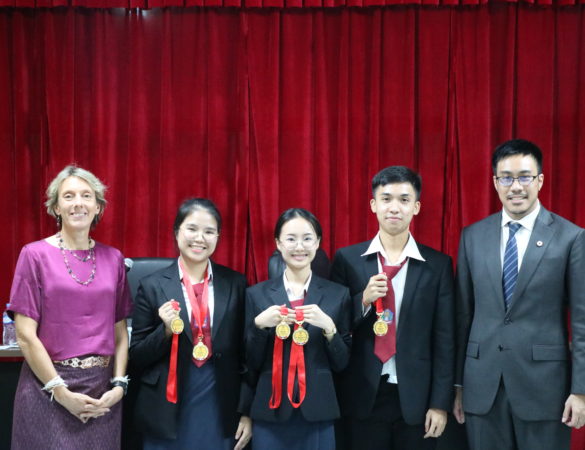
Congratulations to all the participating teams for their remarkable performance in the national round, and special congratulations to the winning team Ms. Duangdaophet Keobounphanh, Ms. Souphavanh Nanthaphone and Mr. Sonethalin Chanthavong, which will be representing the FLP at the International Round of the competition in March 2024 in Hong-Kong!

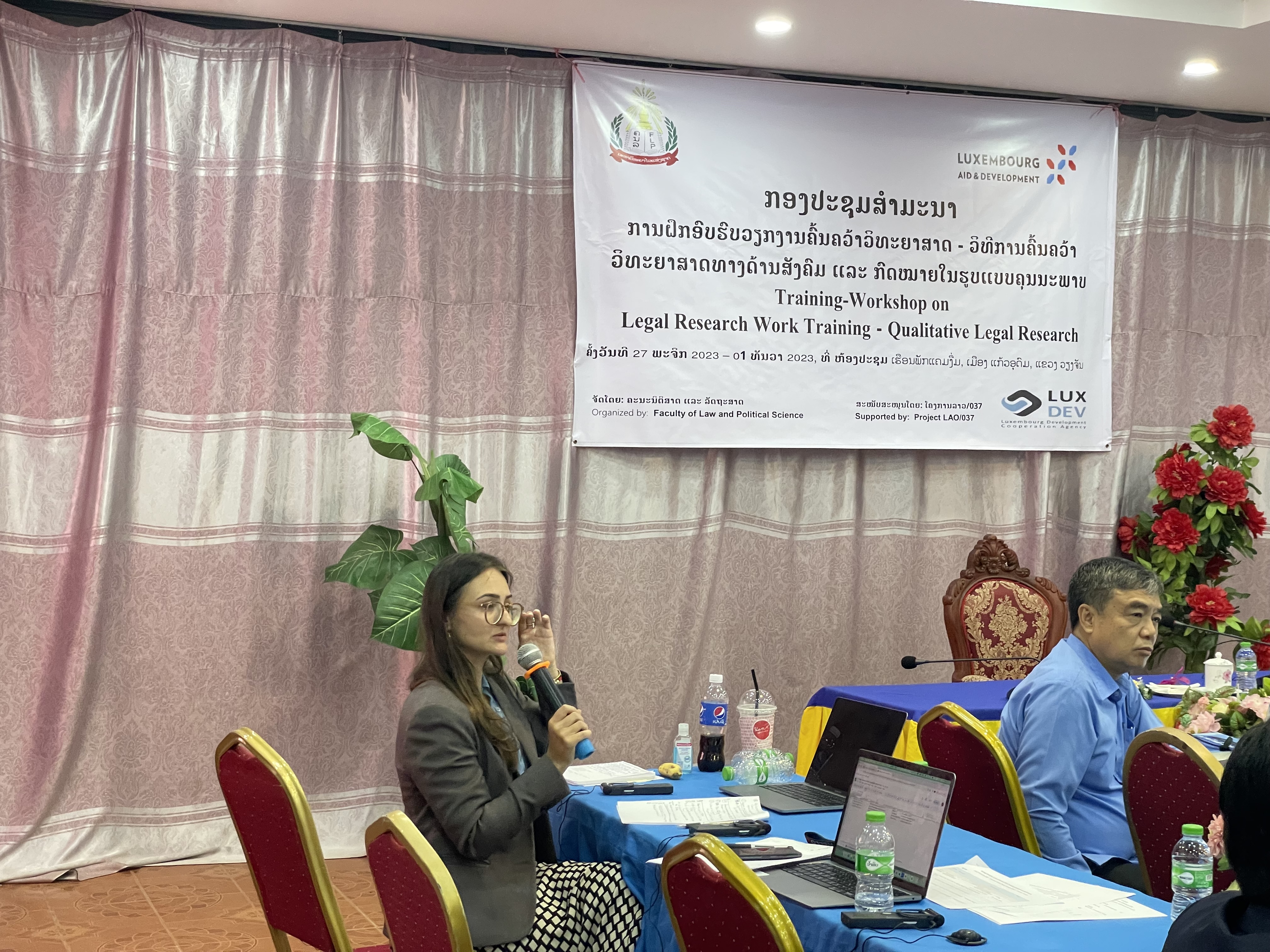
The University of Luxembourg continues to support legal research in Laos. In this regard, a five-day workshop was hosted by the Research Division of the Faculty of Law and Political Science (FLP), National University of Laos (NuOL) with technical support from the University of Luxembourg Inter-University Cooperation Project Laos-Luxembourg, and financially supported by LuxDevelopment’s Project LAO/037 dedicated to legal research methodology, qualitative Legal Research on 27th December to 1st December 2023. The event took place in Thalath and was chaired by Mr. Bounkhong Phetdaohoung, Vice Dean of the FLP and Assoc. Prof Viengvilay Theingchanxay, the Dean of the FLP. The workshop brought together over 35 Lao lecturers from the FLP and NuOL, along with invited guest speakers, including Ms. Paulina Baschton, our Inter-University Cooperation Project liaison officer.

The workshop focused on the methodology of scientific research in the field of law. It aimed to provide an understanding of qualitative legal research. Participants followed presentations on the different types of qualitative legal research, learned how to design questionnaires and use basic data analysis. The workshop also covered the essentials of conducting a good research proposal and finding relevant sources for research. During the first day of the workshop, Assoc. Prof Sithixay Xayyavong, a lecturer from the National University of Laos, gave a presentation on the Theory of Qualitative Legal Research Based on Historical Research Methodology. In the afternoon, Assoc. Prof. Dr. Dexanourath Seneduangdeth gave a presentation on Types of Qualitative Legal Research. This broadened the participants’ understanding of the different approaches they can take when conducting research not only in the legal field but also in social science research.

The second day of the workshop was devoted to the usage questionnaires and data analyses, the tools commonly used for social science research presented by Prof. Dr. Sunthone Phommasone. In the morning, he started with a presentation on how to design a good questionnaire and shared the questionnaire he conducted in the past as an example. In the afternoon, he introduced the participants to a set of analysis tools that could simplify the process of data gathering and analysis. The attendees were guided on how to use the tool to analyze the information they collected, and the professor encouraged them to learn by doing.

On the third day of the workshop, participants were given instructions on how to use the research tool step-by-step to understand both qualitative and quantitative research. In the afternoon, Ms. Paulina Baschton gave a presentation basic legal research methodology. The participants revisited the key elements for good research proposals and were given time to apply the learned structure to their research proposals. She also recapped different types of research methodologies, as FLP researchers tend to limit themselves to only qualitative and quantitative research.

On the fourth day of the workshop, participants had the opportunity to discuss and interact with each other. Ms. Paulina Baschton began the day with a brief presentation on important elements and key questions of legal research. During the presentation, there was a lot of discussion on distinguishing research objectives and research questions and the need to identify a strong research question. Participants also discussed the problems that can arise with a too broad or too narrow research question. Afterwards, participants were invited to present their research topics that they had come up with during the previous workshop organized by the research department. Ms. Paulina provided feedback on their presentations, specifically on the research objectives and research questions. Many interesting research topics were presented by the participants.

The last day of the workshop was chaired by Assoc. Prof. Viengvilay Theingchanxay, the Dean of the FLP. The workshop focused on finding relevant legal sources for research and began with Mr. Patthanaphone Nammalath, the Project Assistant, giving a brief instruction on how to register and use OpenAthens. OpenAthens is a platform supported by the project to enable remote access to the e-library. Mr. Patthanaphone made sure that all participants were able to access the e-library remotely. Participants were then assigned the task by Ms. Paulina to find two relevant sources related to the topic they presented on the fourth day using the e-library. After the participants found and presented the sources and shared the difficulties they encountered in finding pertinent sources, Ms. Paulina provided feedback on how to define relevant keywords for their research. The participants discussed the difficulties associated with finding sources for legal research in Laos due to the limited literature in Lao language and the difficulties in finding appropriate key words for platforms like the e-library which always includes translations from Lao into English or Thai language.

During the workshop, the participants showed an open-minded approach and actively engaged in constructive discussions and activities and assignments. They raised many questions about legal research and methodology, academic integrity, and how these concepts apply in the context of Lao academia. The workshop was a unique and fruitful gathering of the future “Lao research community,” which emphasized the need for further collaboration to encourage quality legal research. Lastly, at the end of the workshop, the participants were encouraged to participate in the research forum scheduled for December 15th.

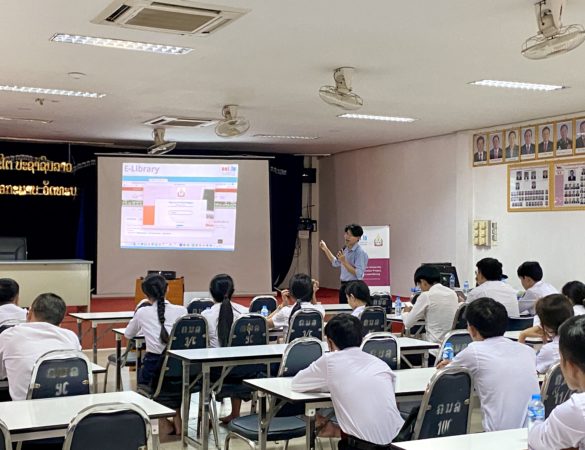
On November 1,  2023, the Inter University Cooperation Project Laos-Luxembourg organized an e-library training for the freshmen at the Faculty of Law and Political Science (FLP) of NUOL.

The training was attended by 30 first-year students from the Faculty of Law and Political Science (FLP), and it was led by Patthanaphone Nammalath, the project assistant of the Inter University Cooperation project.

Patthanaphone introduced students to the available resources at the university and explained how to access them remotely from outside the campus. The training provided an opportunity for students to learn how to access credible online resources available to them through the e-library to assist them in their coursework and research projects. The training provided a hands-on approach on how to navigate through the e-library using both basic and advanced search options. The trainer provided effective techniques to locate relevant information, enabling students to develop essential research skills.  The training enabled students to access reliable online information through the FLP e-library website.

The student participated actively in the training session and expressed satisfaction at the end. The trainer offered a fun and engaging activity via Kahoot. This interactive method allowed the students to practice and review the given information. After the training, up to 40 students register to get remote access to E-library.

This training was highly beneficial for the students, providing them with the opportunity to develop research skills and access reliable online resources. We look forward to similar training session in the future for the benefit of the student community at the FLP.

In the framework of the Inter-University Cooperation Project the University of Luxembourg is supporting the teaching and capacity development at the Faculty of Law and Political Science (FLP) of the National University of Laos.

From June 14th to June 16th, 2023, a three-day seminar on comparative legal traditions was held at the FLP in Vientiane. The project welcomed Professor Elise Poillot, a professor at the University of Luxembourg, as the seminar speaker.

The seminar focused on improving the participants’ legal knowledge of different legal systems and their historical development. Specifically, it compared micro and macro comparisons. The seminar brought together lecturers from the FLP, lecturers from the National Institute of Justice (NIJ) in Vientiane, and various practitioners, including lawyers who are members of the Lao Bar Association (LBA), judges from the Lao People’s Supreme Court (PSC), and prosecutors from the Lao Office of the Supreme People’s Prosecutor (OSPP).

During the morning session of the seminar’s first day, attendees were introduced to the criteria used to classify legal traditions. This included a discussion of the historical background of legal systems, types of legal sources, and hybrid legal systems. The purpose of this presentation was to provide participants with a better understanding of the different characteristics of legal systems currently existing around the world.

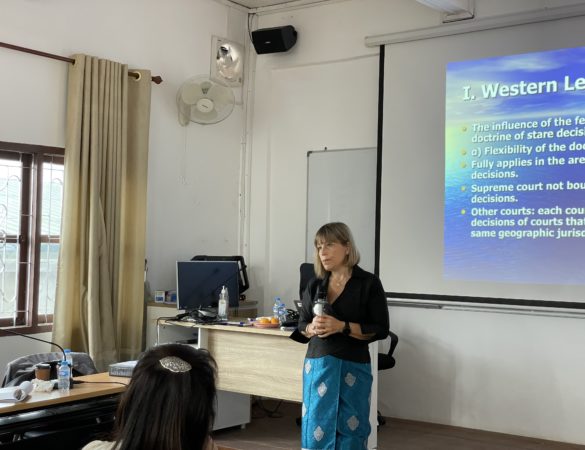
On the second day of the seminar, participants delved into exploring various legal traditions in Europe, America, Africa, and Asia. The topic of Western legal tradition received the most positive response from attendees, leading to lively discussions between Professor Elise Poillot and the participants. The topic that stood out the most on that day was the development of the court system in civil law countries compared to the countries following the common law systems. Prof. Elise Poillot offered insights into how European Union Law affects each member state. She provided practical examples to illustrate her points and helped attendees gain a better understanding of Western legal traditions. The session was informative and provided valuable knowledge to all participants.

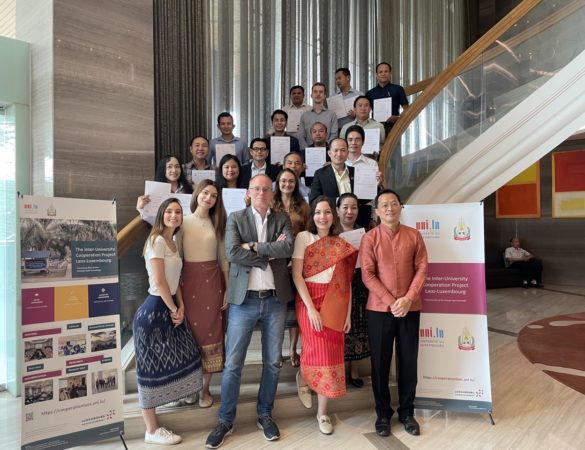
During the final day of the seminar, Professor Elise Poillot delivered a presentation on Islamic law. She also invited participants to ask questions relating to her presentations from the last two days. Many participants posed interesting questions about the sources of law. Major points of interest included the particularities of the common law system due to its distinct nature from the Lao legal system and time was dedicated to adequately explain its characteristics and differences. Upon the seminar’s conclusion, attendees received certificates of attendance, presented by Professor Elise Poillot.

The seminar was a great success thanks to the active participation of the various participants, including prosecutors, practitioners, lawyers, judges, and lecturers from FLP and NIJ. Going forward, the project will continue inviting professors from the University of Luxembourg to provide lectures that aim to enhance the legal knowledge of those working in the field of law, with a particular focus on FLP lecturers and students.

In the framework of the Inter-University Cooperation Project, the University of Luxembourg is promoting the development of the rule of law. In this context the Inter-University Cooperation Project held its 5th Law Summer School from June 7th to 9th, 2023 in Vientiane Capital. Seventeen candidates were selected based on their interest in improving their legal knowledge for attending the intensive 3-day Law Summer School. This edition included nine law lecturers from the Faculty of Law and Political Science, two law lecturers from the National Institute of Justice, two judges from the People’s Supreme Court, two prosecutors from the training institution of the Office of the Supreme People’s Prosecutor of Lao PDR, and two lawyers from Lao Bar Association.

The Law Summer School aimed to enhance participants knowledge on “Legal Methodology in the Rule of Law State”, a topic, which is highly relevant for interpretation and implementation of laws. The Law Summer School also dealt with paradigms of legal methods, methods of legislation and legislative procedure, methods of application of the law, and International Legal Frameworks, as well as the United Nations Convention Against Corruption. This Law Summer School was taught in English by Prof. Stefan BRAUM (University of Luxembourg)), Melina ANASTASOPOULOU (PhD, Uni.lu), Anna MORAITI (PhD, Uni.lu), Stanislav GUBENKO (PhD, Uni.lu), Areti KOLOVOU-NIKOLAKOPOULOU, and facilitated by MS. Paulina BASCHTON (Liaison Officer of University of Luxembourg in Laos) along with an interpreter.

The summer school began with a welcome from Professor Stefan Braum, the project leader. He gave a comprehensive explanation of the Paradigms of Legal Methods in a Rule of Law state and the process of legislation. During the morning session of the first day, the focus was primarily on discussions pertaining to the scope and characteristics of the law, focusing on general and abstract regulations, as well as the reasoning, motivation, and risk assessment involved in creating new laws. The afternoon session focused on legislative procedures in different political systems and forms of democracy. The participants deepened their understanding of the process of transforming a bill into law in different jurisdictions. They also had the opportunity to examine standards for legislation by the executive, including administrative regulations, acts with legislative content, legislative decrees, and emergency laws. Presenters, Melina ANASTASOPOULOU (PhD, Uni.lu) and Anna MORAITI (PhD, Uni.lu), also provided a comparative overview of the relevant provisions under Greek, French, and Luxembourgish law. Following the presentation, the audience actively discussed existing challenges in the legislation process in Lao PDR and possible solutions to these challenges.

On the second day, the focus was on the method of application and interpretation of the law. Participants were divided into two groups and given a hypothetical case to work on and present their findings. Participants were asked to explain their reasoning for applying one of the following interpretation methods to a hypothetical case: interpretation according to wording, historical meaning and purpose, or systematic interpretation. Each group consisted of a judge, prosecutor, and law lecturers with different backgrounds and expertise. Areti KOLOVOU-NIKOLAKOPOULOU (PhD, Uni. Lu) led the presentation and the participants’ pleadings. After the exercise, Prof. Stefan Braum provided feedback on how to improve application of the method of interpretation to solve concrete cases effectively. This session was followed by a presentation from a participant on “Challenges of Legal Application in Lao PDR”.

During the afternoon session, Stanislav GUBENKO (PhD, Uni.lu) gave a presentation on Res Judicata and Judicial Review. Participants gained a better understanding of the functions of Res Judicata and expanded their legal knowledge on the binding nature of court decisions as well as the possibilities of judicial case review. The session was followed by practical and hypothetical cases giving the participants room to discuss possible solutions. At the end of the session, attendees had the chance to take a quiz on the Kahoot Platform prepared by the presenter to test their newly acquired knowledge on res judicata and judicial review.

On the final day of the Law Summer School, the focus was on reviewing the lessons from the past two days. The main points were recapped and concluded in a round-table discussion. Participants had the opportunity to reflect on how to improve teaching and research using legal methodologies. The closing ceremony included the presentation of certificates to all participants, handed out by Prof. Stefan Braum.

The participants of this year’s law summer school demonstrated exceptional enthusiasm and motivation, actively engaging with the guest speakers and each other to recognize the importance of legal methods. For ongoing support and to further enrich their knowledge, every participant was provided with a comprehensive reading list and other relevant learning materials.

Under the framework of the Inter-University Cooperation Project, the development of capacity building for FLP librarians is given priority along with the establishment of an E-library.

In this context, the Inter-University Cooperation Project Laos-Luxembourg cooperated with the Electronic Information for Libraries in Thailand (EIFL-Thailand) to support strengthening capacity building for FLP librarians at the Faculty of Law and Political Science of the National University of Laos (FLP NUOL). The training was held at the library of the Faculty of Law and Political Science from 24 April – 19 May 2023. The aim of the collaboration with EIFL-Thailand is to transform the FLP library into a well-run facility with knowledgeable librarians.

This 4-week training was led by the EILF experts Mrs. Suratsawadi Ditsakul and Ms. Sompong Oudomdet, Thai experts who have long-standing experiences working in academic libraries. The training was devoted to FLP librarians including Mr. Kherngkham Syhalard (Head of the Library), Ms. Symueng Syvongdaow (Deputy head of the library), Mr. Sungkhone Niyomkham (Head of Library IT), Ms. Khamphpunthone Phenfprachan, Ms. Sirixay Souliyavongsa, and Ms. Somphien Vunpaserd. The main purpose of the training is to improve the management of the FLP library, in particular, to ensure the proper registering, and cataloging to accompany the extensive acquisition of new textbooks supported by our project as well as the accessibility of the acquired materials and to enhance the library environment.

During the first week of training, Thai experts and FLP librarians collaborated to discuss and brainstorm ideas to improve the FLP library. Their focus was on addressing urgent issues that needed attention. The EILF experts showed a video showcasing four libraries: Thammasat Library, Chulalongkorn Library, Bangkok Library, and Orchard Library in Singapore to show best practices and inspire ideas for the development of the FLP library. FLP librarians had the chance to visit two libraries in person during the same week. These included the central library of the National University of Laos and the National Library of Laos. The visit was led by Ms. Paulina Baschton (Liaison Officer of Uni.lu), along with the two EILF experts, Mr. Patthanaphone Nammalath (Uni.lu’s Project Assistant), and 5 FLP librarians. The librarians from both places warmly welcomed the visits. On the final day of the first week, FLP librarians were given the opportunity to share the ideas they gained during the library visits and discuss with the experts how to apply them to the development of the FLP Library.

In the second week, the FLP librarians underwent a skills training session using “Canva”, which was conducted by Mr. Sungkhone Niyomkham, the Head of Library IT. This activity aimed to equip the library staff with the skills to independently create posters, logos, and public relations signs for the library as and when required. Furthermore, the EILF experts studied the library user survey made in 2022 to analyze feedback from students who use the library regularly. They recommended making improvements based on the suggestions provided by these students. This week, the library staff began implementing the recommended library improvement plan. They replaced the old meeting room booking whiteboard with a new computer screen and renovated the rattan table set to provide better reception for library visitors.

The third week of the training focused on the library improvement tasks with support from the EILF experts. Many tasks have been done within this week. Particularly, the shoe cabinet at the entrance of the library has been improved, old books were removed from the library to use the space for organizing journals and foreign books that are useful to students in their thesis writing, and most importantly, based on the recommended rotation schedule for the EILF experts library staff now regularly provides support to students in the dedicated thesis room.

During the last week of training, the FLP librarians were provided with two capacity building presentations on human resource management and customer service skills. The EILF experts believed that these topics would most effectively improve the librarians’ hard and soft skills. In this context the EILF experts suggested a duty sheet model for work management at the FLP library. The details were shared with Ms. Symueng Syvongdaow, the Deputy Head of the library, and included a journal registration form, duty schedule for organizing books, journals, and theses, as well as a work rotation schedule.

During the final day of the training, the EIFL experts presented the results of the 4-week training and made recommendations for further library development. Some of the recommendations included improving service to receive more positive feedback from students, urgently resolving all library feedback, and encouraging students to use the E-library more. The head of the library also gave a brief presentation, stating that the overall result was satisfactory for all FLP Librarians. They expressed a strong commitment to applying the lessons learned in future library development.

The training provided to librarians has made a significant contribution to the FLP library. It has helped to strengthen the knowledge of all library staff in the field of librarianship. The project has achieved great success in library training, and it will continue to support the training of library staff and provide essential materials for the library. This will help enhance the potential of the FLP library and make it a place of advanced technology and progress.